What S.W.A.T. Stands For and How Police Tactical Units Operate
Quick Answer
S.W.A.T. stands for Special Weapons and Tactics.
- Activated for high-risk incidents like hostage situations
- Receive specialized training in tactics, breaching, and marksmanship
- Use advanced equipment such as armored vehicles and night vision
Key Facts
- SWAT teams were created in the 1960s as a response to rising violent crime and the need for specialized police capabilities
- Core operations include hostage rescue, barricaded suspect containment, high-risk warrant service, and active threat neutralization
- Modern SWAT teams have evolved from purely tactical units to incorporate community-oriented philosophies and de-escalation techniques
- Equipment typically includes body armor, tactical rifles, breaching tools, less-lethal options, and advanced communications gear
- Controversy surrounds SWAT expansion into routine policing, with critics citing militarization concerns
- Recent reforms focus on demilitarization, community oversight, and updated training protocols
- The Department of Defense established its own software acquisition SWAT team in 2024 to expedite technology adoption
- Ongoing challenges include balancing tactical effectiveness with community expectations and evolving threat landscapes
What S.W.A.T. Actually Means The Acronym and Its Origins
The acronym S.W.A.T. is universally recognized as "Special Weapons and Tactics," though some departments historically used variations like "Special Weapons Attack Team" before standardizing on the current terminology.
The name itself communicates the core function of these units: they are equipped with specialized weapons and employ refined tactical methods beyond what standard patrol officers can access. The concept emerged in the 1960s, most famously with the Los Angeles Police Department forming the first dedicated SWAT unit in 1967.The impetus was a series of high-profile incidents, including the 1965 Watts riots and the 1966 University of Texas tower shooting, that exposed the limitations of conventional police responses to extreme violence. Law enforcement realized that officers with standard sidearms and minimal tactical training were ill-equipped to handle snipers, fortified barricades, or coordinated attacks.Today, SWAT teams exist at virtually every level of American law enforcement, from large municipal departments with full-time units to smaller agencies relying on part-time, multi-jurisdictional teams. The composition and readiness vary significantly based on budget, population, and threat assessment.A 2021 International Association of Chiefs of Police (IACP) study examined the composition, protocols, and training procedures of these teams, confirming that operational standards remain inconsistent across jurisdictions. The term "special weapons" encompasses more than firearms.It includes breaching tools like battering rams and explosive charges, less-lethal options such as beanbag rounds and chemical agents, night vision and thermal imaging devices, armored vehicles, and sophisticated communications systems. "Tactics" refers to the coordinated maneuvers, entry methods, containment strategies, and negotiation protocols that define SWAT operations.Together, the name captures both the tools and the methodology that distinguish these units from regular policing.How SWAT Teams Actually Operate From Callout to Resolution
Activation and Decision-Making
A SWAT team is not deployed for every police call. Activation typically follows a needs assessment, as outlined in departmental policies.
The threshold for calling in SWAT varies by agency but generally involves situations where:- A suspect is barricaded and refusing to surrender
- Hostages are held under threat of violence
- An active shooter presents an ongoing lethal threat
- High-risk warrants involve known violent offenders or fortified locations
- Suspects possess heavy weaponry or explosives
The decision to deploy is made by command staff, often a patrol supervisor or watch commander, based on real-time intelligence and risk assessment. Once activated, the team responds to a staging area near the incident to establish command and control.
The Operational Cycle
Every SWAT operation follows a structured sequence. The first phase is containment and isolation.
The team secures the perimeter, prevents escape, and establishes a sterile zone for operations. This buys time for further assessment and negotiation.The second phase is intelligence gathering. SWAT officers use binoculars, drones, listening devices, building blueprints, and witness statements to understand the suspect's location, armament, mental state, and potential hostages.This information drives tactical planning. The third phase is negotiation.Many SWAT teams include trained crisis negotiators who attempt to resolve the situation peacefully. Negotiation can last hours or days.The goal is to de-escalate without violence, using time as a pressure tool. Only when negotiation fails or lethal action becomes immediately necessary does the team move to an assault.The fourth phase is tactical entry or resolution. If force becomes necessary, the team executes a coordinated breach—using explosive charges, battering rams, or ballistic shields—followed by rapid room clearing to neutralize threats and secure hostages.Entry is fast, loud, and overwhelming by design, intended to disorient suspects and minimize officer vulnerability. The final phase is medical and forensic response.SWAT teams increasingly include tactical medics who provide immediate trauma care to officers, suspects, or civilians. After the incident, the scene is secured for evidence collection and investigation.Why Speed and Surprise Matter
The tactical advantage of a SWAT team rests on speed, surprise, and violence of action—but not recklessness. Training emphasizes precision shooting, coordinated movement, and constant communication.
Teams practice clearing rooms, moving through hallways, and engaging threats under stress. The margin for error is narrow.A mistake in a hostage situation can cost multiple lives. Recent training evolution focuses heavily on safety.As reported in 2024, changes in methods and training aim to make high-risk raids safer for officers. This includes better use of less-lethal options, improved situational awareness training, and more realistic scenario-based drills.The goal is to preserve life wherever possible while still neutralizing threats.The Equipment That Makes SWAT Different
Personal Protective Gear
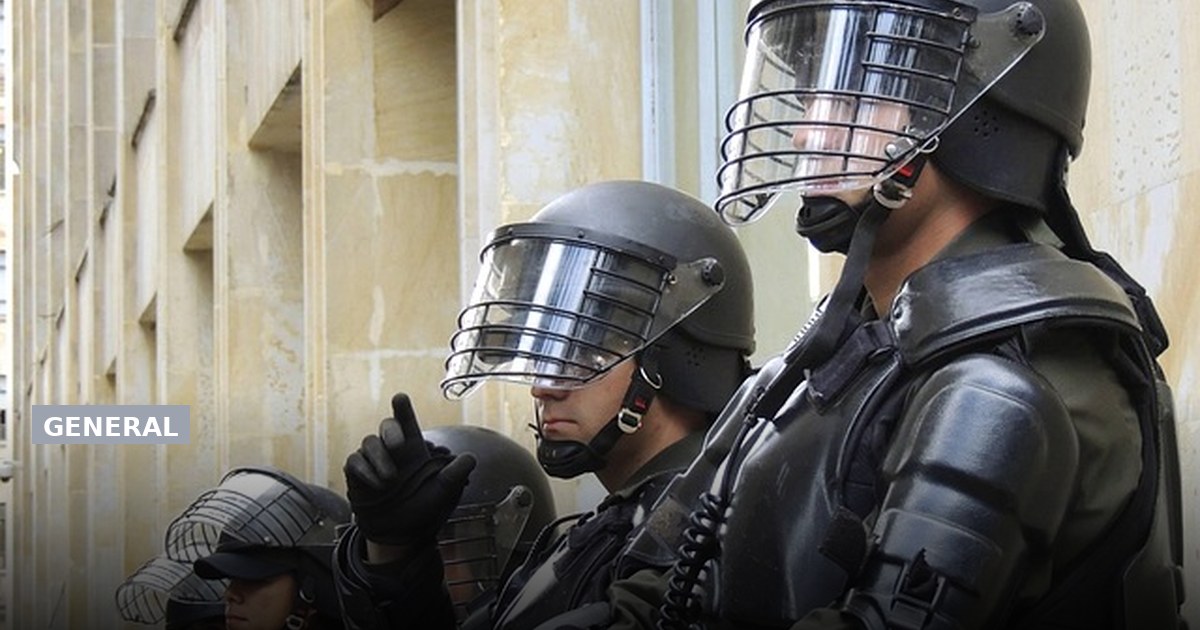
SWAT officers wear significantly more protective equipment than patrol officers. Standard gear includes a ballistic helmet rated to stop rifle rounds, a plate carrier or vest with ceramic or steel plates, eye and ear protection, and tactical gloves.
This gear is heavy—often exceeding 40 pounds—and requires physical conditioning to wear for extended periods. The vest typically carries multiple magazine pouches, a radio, a medical kit, a flashlight, and sometimes a gas mask.The goal is self-sufficiency. A SWAT officer cannot rely on immediate backup for ammunition or medical supplies in the middle of a breach.Weapons Systems
The primary weapon for most SWAT officers is a patrol rifle, usually an AR-15 platform chambered in 5.56mm NATO. This offers accuracy, stopping power, and magazine capacity superior to a pistol.
Some officers carry submachine guns for close-quarters work, especially in tight spaces like buses or small buildings. Sidearms are typically high-capacity semi-automatic pistols, often chambered in 9mm or .45 ACP.Many teams issue suppressors for certain operations to reduce noise and preserve hearing in confined spaces. Less-lethal options are standard.These include 40mm launchers firing foam batons or beanbags, chemical agents like CS gas, flashbang grenades, and conducted energy weapons (tasers). The availability of less-lethal tools gives SWAT commanders a middle ground between verbal commands and lethal force.Breaching and Entry Tools
Getting into a fortified location requires specialized equipment. Battering rams are manual tools used to force doors.
Explosive breaching charges are used for heavy doors or walls. Hydraulic tools, similar to the "Jaws of Life," can peel open reinforced doors.Ballistic shields provide cover while officers approach entry points. Thermal imaging cameras help officers locate suspects behind walls or in darkness.Drones offer aerial surveillance without exposing officers to fire. Robots can deliver communication devices or cameras into danger zones.These technologies reduce risk and improve intelligence.Communications and Coordination
Every SWAT officer wears a radio headset that allows constant communication within the team and with command. This is critical during dynamic entries where verbal commands must be heard over gunfire and explosions.
Teams use hand signals and tactile communication as backups. Coordination between entry teams, snipers, negotiators, and command is achieved through dedicated radio channels and real-time video feeds.The Controversy Militarization and Reform
The Core Criticism
SWAT teams face persistent criticism over militarization. Critics argue that the equipment, funding, and mindset of SWAT units have expanded beyond their original purpose.
The 1033 program, which transfers surplus military equipment to police departments, has been a flashpoint. Armored vehicles, grenade launchers, and night vision gear originally designed for combat zones now appear in suburban police raids.The concern is not that SWAT teams exist, but that they are used too often and for the wrong reasons. High-profile killings and controversial policing policies have fueled public distrust.Critics point to SWAT deployment for low-level drug warrants or traffic violations as evidence of mission creep.Findings from Research
A Harvard expert in 2023 examined why police departments resist reforms to militarization. The research found that the issue is complex, with many departments continuing to resist changes even amid a rising crisis of confidence in law enforcement.
Resistance often stems from organizational culture, funding structures, and a belief that military-style equipment is necessary for officer safety. The IACP National SWAT Study provides a more measured view.It found that SWAT teams vary widely in composition and practice. Not all teams are militarized.Many smaller agencies have limited resources and use SWAT only for genuine emergencies. The study called for better standardized protocols and community engagement.Reform Efforts
Legislative attempts to address SWAT militarization have been mixed. In 2021, some state legislatures passed police reform bills that restricted SWAT deployment or required greater oversight.
However, critics argue that some of these measures took away important tools used by law enforcement without providing alternatives. Reform advocates push for three main changes:- Deployment restrictions: Limiting SWAT use to situations involving imminent threat of violence, not routine warrant service
- Community oversight: Civilian review boards with authority to examine SWAT policies and incidents
- Transparency: Public reporting on SWAT operations, including number of deployments, types of calls, and use of force incidents
The future of American SWAT teams, as examined by the Future Policing Institute, involves balancing tactical capability with community accountability. Evolving threats—including domestic terrorism and active shooters—require robust response capabilities.
But public trust requires that capability be used judiciously.The Future of SWAT Trends for 2026 and Beyond
Changing Threats and Community Expectations
The threat landscape is shifting. Traditional SWAT scenarios like barricaded suspects and hostage situations remain common, but new threats have emerged.
Domestic extremism, school shootings, and coordinated attacks require SWAT teams to adapt. The rise of 3D-printed firearms and homemade explosives also presents challenges for threat assessment.At the same time, community expectations are evolving. The public demands accountability, transparency, and proportionality in police use of force.SWAT teams cannot operate in a vacuum. They must justify their actions to the communities they serve.Training Evolution
Training is becoming more sophisticated. Scenario-based training using simunitions, virtual reality, and live-fire houses is standard.
Teams train for active shooter response, hostage rescue, and high-risk warrant service. The emphasis is on decision-making under stress, not just marksmanship.Crisis intervention training is increasingly integrated into SWAT curriculum. Officers learn de-escalation techniques, mental health awareness, and communication strategies.This reflects a broader shift toward policing that prioritizes life preservation alongside threat neutralization.Technology Integration
Technology is transforming SWAT operations. Drones provide real-time aerial intelligence.
Robots deliver communication devices and cameras into dangerous spaces. Night vision and thermal imaging allow operations in total darkness.Advanced communications systems enable real-time coordination between multiple units. The Department of Defense's establishment of a software acquisition SWAT team in 2024 signals a broader trend: the term "SWAT" is being applied outside traditional law enforcement to describe rapid, specialized teams focused on solving complex problems quickly.The Ongoing Debate
The fundamental tension in SWAT policing remains. Communities want both safety and liberty.
They want officers who can stop threats but also show restraint. They want specialized capability without militarized culture.This tension cannot be resolved by equipment or training alone. It requires ongoing dialogue between law enforcement and the public.The future of SWAT will be shaped by who controls its deployment, how its actions are reviewed, and what values guide its training. The technology will continue to advance.The threats will continue to evolve. But the core question remains: how do we give police the tools to protect themselves and others without eroding the trust that makes policing legitimate?Frequently Asked Questions
What does SWAT stand for?
SWAT stands for Special Weapons and Tactics. It refers to specialized police units trained and equipped to handle high-risk situations beyond the capabilities of regular patrol officers.
When were SWAT teams first created?
The first modern SWAT team was formed by the Los Angeles Police Department in 1967, following a series of violent incidents that exposed the limitations of conventional police tactics.
Are SWAT teams used for routine police calls?
SWAT deployment is intended for high-risk situations such as hostage rescues, barricaded suspects, active shooters, and high-risk warrant service. However, critics argue that SWAT teams are sometimes deployed for lower-risk calls, contributing to concerns about militarization.
What equipment do SWAT officers carry?
SWAT officers typically wear ballistic helmets and body armor, carry patrol rifles and sidearms, and use breaching tools, less-lethal weapons, night vision devices, and advanced communications gear. Equipment varies by department and mission.
How are SWAT teams being reformed?
Reform efforts include restricting SWAT deployment to situations involving imminent threat of violence, increasing community oversight, requiring public reporting on operations, and integrating de-escalation and crisis intervention training into SWAT curriculum.
Reference Notes
Information in this article is based on publicly available sources. Some details may change over time.
Verify with official sources before acting.- Linfield vs Kilmarnock, Comparing Two Clubs with Contrasting Paths to European Competition
- Lynx vs. Liberty, Which Privacy Browser Offers Better Security for Your Daily Browsing?
- Colombia vs Ghana, Comparing Travel Costs, Safety, and Culture for Your Next Adventure
- Royals vs White Sox, Which Team Offers Better Value for Your Baseball Ticket?