Steve Lacy’s Best Gear, How He Builds Those Grammy-Winning Guitar Riffs

Quick Answer
Steve Lacy builds his Grammy-winning guitar riffs through a distinctive blend of iPhone production, unconventional gear choices, and an instinctive approach to melody that prioritizes feel over technical perfection. His sound is rooted in the idea that constraints—whether from GarageBand on a phone or a single guitar amp—spark creativity.
- Best for: Musicians and producers who want to break free from traditional studio workflows and embrace lo-fi, spontaneous production methods.
- Key point: Lacy’s riffs are not about complex theory or expensive gear; they rely on capturing raw, emotional ideas quickly, often on an iPhone using GarageBand.
- Bottom line: If you want to write riffs that stick like "Bad Habit," stop overthinking gear and start focusing on the strength of the melodic idea itself—then use any tool at hand to record it immediately.
The Unlikely Birth of a Grammy-Winning Sound Why Your Gear Doesn't Matter as Much as You Think
Here’s the uncomfortable truth for gear nerds: Steve Lacy’s most iconic riffs were not born in a multimillion-dollar studio with vintage amps and custom guitars. They were born on an iPhone.
The story of how a shy teenager from Compton, who lost his father to cancer, ended up producing some of the most influential alternative R&B of the decade is a direct challenge to the idea that you need a ‘professional’ setup to write hits. According to the Rolling Stone cover story from September 2025, Lacy's career started "like something out of a VH1 biopic." He was a kid making music on his phone, and when he played those tracks for the musicians who would later take him in, their reaction was simple: "This is the type of music you make?" That question wasn't skeptical—it was awestruck.The point is clear: the raw, unpolished quality of his early iPhone demos was the very thing that made them interesting. This is the core philosophy behind his guitar riffs.They aren't built; they are captured. Lacy has built a career on the idea that the first idea is often the best idea.He doesn't spend hours dialing in a perfect tone. He doesn't layer six guitar tracks to get a "wall of sound." He finds a simple, melodic hook—often just a few notes—and records it immediately.This approach leads to riffs that feel conversational and human, not mechanical. The 2026 reality is that this method is now more accessible than ever.| Gear Philosophy | Typical Studio Approach | Steve Lacy’s Approach |
|---|---|---|
| Primary Recording Tool | High-end DAW (Pro Tools, Logic) | iPhone, GarageBand |
| Guitar Tone | Multi-amp setups, complex pedalboards | Minimal processing, single amp or DI |
| Melody Development | Theory-heavy, chord-scale relationships | Instinctive, humming, trial-and-error |
| Editing Philosophy | Quantize, comp, polish | Keep the first take, embrace imperfection |
This raw approach is not just a gimmick—it is the backbone of his songwriting. But how does he actually turn these simple ideas into the layered, polished tracks we hear on records like Gemini Rights?
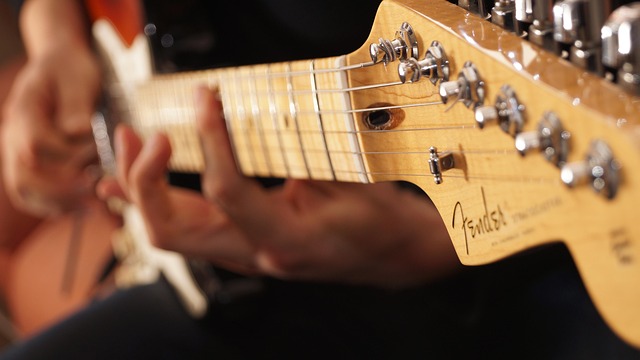

The Minimalist Rig Boss Katana 50 MkII, Fender Strat, and the Art of Restraint
When you look at Lacy's live rig and studio setup, the first thing you notice is what is not there. There are no sprawling pedalboards with 20 boutique stompboxes.
There are no racks of vintage compressors. The gear he leans on is surprisingly accessible to the average player.Let's break down the two core pieces that define his guitar sound. The Guitar: Fender American Professional II Stratocaster This is a workhorse guitar, not a collector's item.The American Professional II Strat is known for its comfortable "Deep C" neck and versatile V-Mod II pickups. Lacy uses it because it provides clarity and punch without being harsh.It allows his riffs to sit in the mix without fighting the bass or vocals. The Stratocaster’s inherent brightness is key to his sound—it cuts through the sometimes murky, lo-fi production he favors.The Amp: Boss Katana 50 MkII Guitar Amplifier This is where things get interesting. The Katana 50 MkII is a solid-state modeling amp that costs around $250.It is the opposite of a "boutique" amp. But for Lacy, it’s perfect.Why? Because it is simple, reliable, and has a clean channel that takes pedals well.More importantly, it forces a specific kind of discipline. You cannot hide behind a massive, complex signal chain.You have to let the guitar and the riff do the talking. The Katana’s built-in effects (delay, reverb, overdrive) are good enough to use straight out of the box, which means Lacy can dial in a basic tone in seconds and start playing.Here is the harsh reality for most guitarists: you are probably using too much gear. You are spending 40 minutes tweaking a pedalboard, and zero minutes playing the riff.Lacy’s setup is a masterclass in subtraction. He removes everything that is not essential, leaving only the core elements: a great guitar, a direct amp, and a simple recording chain.If you have a Focusrite Scarlett 2i2 and a Boss Katana, you already have the foundational tools to sound like him. The missing piece is not a rare pedal; it is the willingness to play a three-note riff with conviction.| Gear Component | Model | Estimated Cost (2026) | Why It Works for Lacy |
|---|---|---|---|
| Guitar | Fender American Professional II Stratocaster | $1,500 - $1,700 | Versatile pickups, clear tone, cuts through mix |
| Amplifier | Boss Katana 50 MkII | $250 - $300 | Simple, affordable, reliable clean channel |
| Audio Interface | Focusrite Scarlett 2i2 (3rd Gen) | $180 - $200 | Low latency, high-quality preamps for direct recording |
This minimalist rig is the foundation. But the real magic—the thing that makes a riff sound like "Steve Lacy"—happens in the arrangement and the space he leaves for other elements.
The "Bad Habit" Blueprint How to Build a Riff That Hooks an Entire Generation
Let's get specific. The song "Bad Habit" was a cultural event.
It won Grammys. It was everywhere.And the guitar riff that drives it is deceptively simple. It is a clean, fingerpicked pattern that sits in a weird, almost off-kilter rhythm.How do you write something like that? You don't follow a formula.You break one. Step 1: Start with a single string. Lacy often builds riffs around one or two strings.He is not playing barre chords or complex arpeggios. He finds a melodic shape that can be played on the high strings (B and E).This creates an open, airy feel. The "Bad Habit" riff is essentially a melody that dances around the root note.It is more like a vocal line than a traditional guitar part. Step 2: Use space as a weapon. Listen to the riff.It is not constant. There are gaps.Silence. Lacy understands that the notes you don't play are just as important as the ones you do.This is one reason his riffs are so catchy—the brain fills in the gaps, making the listener an active participant. When you play the riff on a Boss Katana 50 MkII, keep the gain low.You want the notes to ring out clearly and then decay naturally. That decay is the space.Step 3: Record it on the worst microphone you have. Lacy famously recorded parts for Gemini Rights on his iPhone and later re-amped them or used them as-is. The lo-fi quality gives the riff a texture that a pristine studio recording cannot replicate.If you have a Focusrite Scarlett 2i2, try recording the guitar direct (no amp) and then running it through a cheap plugin or a slightly overdriven amp sim. Do not try to "fix" it.The imperfection is the feature. Step 4: Let the bass and drums do the heavy lifting. Lacy’s riffs are often designed to be melodic hooks, not rhythmic anchors.He lets the bass guitar hold down the harmony and the drums keep the pocket. This frees the guitar to float on top.This is a critical lesson for aspiring producers: your guitar riff does not need to do everything. It should do one thing very well.If it is a good melody, that is enough.| Song Element | Lacy’s Approach | Common Mistake |
|---|---|---|
| Guitar Tone | Clean, bright, minimal reverb | Overdriven, muddy, too much chorus |
| Rhythm | Syncopated, floating, off-beat | Straight eighth notes, locked to kick drum |
| Recording | Lo-fi, direct, first take | Overproduced, quantized, comped to death |
This blueprint is powerful, but it is specific to Lacy’s style. Does this mean you should ignore music theory entirely?
No. But it does mean you should prioritize feel over correctness.The Theory of "Wrong" Notes Why Intuition Beats a Music Degree Every Time
There is a recurring theme in discussions about Steve Lacy: he does not always follow the rules. His chord progressions are often unconventional.
His guitar riffs sometimes land on notes that a traditional harmony teacher would call "wrong." But that is precisely why they work. He is not thinking in terms of "this note is the 7th of the dominant chord." He is thinking, "This note sounds interesting here."The Power of the Chromatic Passing Tone Lacy frequently uses notes that sit just outside the scale.
A classic example is playing a note that is one half-step above or below the target note. It creates a moment of tension that resolves beautifully.In typical pop music, this is avoided because it can sound "jazzy" or "confusing." Lacy uses it because it sounds human. It sounds like someone is humming a tune and taking a wrong turn before finding their way back.How to Apply This with a Fender Stratocaster Your Stratocaster is perfect for this. The 22 frets and the tremolo bridge (if you have one) allow for micro-bends and slides that can make these "wrong" notes sound intentional.Play a simple major pentatonic scale, but on one of the notes, bend it up just a quarter-tone. You are now in Lacy’s territory.You are creating a sound that is between two pitches. That ambiguity is the hook.Why a Music Degree Can Be a Trap This is not an attack on music education. Theory is useful.But it can create mental barriers. A trained guitarist might avoid playing a flat 5 against a major chord because they "know" it is dissonant.Lacy has no such filter. He plays the note because it feels good.The 2025 Rolling Stone interview noted that Lacy described his process as "a thought here and something profound there, and then a joke right after that." His music is conversational, not academic. He is riffing, literally and figuratively.If you are stuck in a creative rut, stop thinking about scales. Put down the theory book.Pick up your Stratocaster. Plug into your Boss Katana.Set the dial to a clean sound. Now, play a note that you think is wrong.Hold it. Does it create a feeling?If yes, you have just found a Steve Lacy riff.| Musical Concept | Traditional Rule | Lacy’s Approach |
|---|---|---|
| Dissonance | Avoid or resolve quickly | Embrace as a tension tool |
| Melody | Move by step | Leap to unexpected intervals |
| Harmony | Use functional chords | Use chords for color, not function |
This intuitive approach is why his music feels so fresh. But it also raises a big question: how do you turn this haphazard method into a finished song that millions of people want to hear?
From Phone Demo to Finished Album The 2025-2026 Workflow
As of June 2026, Steve Lacy is deep into the rollout for his third studio album, Oh Yeah?, which was announced in August 2025. The album is paired with news that his band, The Internet, is working on new music.
This is a critical window for understanding his process. How does he take the chaotic, lo-fi ideas that he creates on his iPhone and turn them into a cohesive album?Phase 1: The Seed (iPhone + GarageBand) Everything starts here. Lacy records a guitar riff, a vocal melody, or a drum pattern directly into his phone.This is the raw, unedited idea. He does not fix the timing.He does not adjust the pitch. He captures the energy.This phase is about quantity and speed. The goal is to get 50 ideas and throw away 45 of them.Phase 2: The Scaffold (Focusrite Scarlett 2i2 + DAW) Once he has a promising seed, he moves to a more structured setup. The Focusrite Scarlett 2i2 is the perfect bridge between the lo-fi phone recording and a professional mix.He can re-record the guitar part with better clarity, but he keeps the performance exactly the same—including the mistakes. He might plug a Fender Strat directly into the Scarlett and use an amp sim that mimics the tone of his Boss Katana.This phase is about building the arrangement: adding bass, drums, and vocals around the guitar riff, but never overpowering it. Phase 3: The Edit (Kill Your Darlings) This is the hardest phase.Lacy has to decide what stays and what goes. The Rolling Stone interview from 2025 described his thought process as a mix of "profound" and "joke." This means the album will have serious moments and absurd moments.The editing process is not about making everything sound "good." It is about making everything sound honest. If a guitar part is technically sloppy but carries emotional weight, it stays.Phase 4: The Release (No Overthinking) Lacy announced Oh Yeah? on Instagram and various media outlets. He is not waiting for the "perfect" moment to release.He is putting the music out and letting the audience react. This is the final, and most important, lesson for any musician: you have to finish the song and let it go.You cannot edit a song that exists only on your hard drive.| Phase | Tool | Goal | Timeframe |
|---|---|---|---|
| 1. Seed | iPhone, GarageBand | Capture raw idea | Minutes |
| 2. Scaffold | Focusrite Scarlett 2i2, DAW | Build arrangement | Days |
| 3. Edit | DAW, critical listening | Refine, cut excess | Weeks |
| 4. Release | Streaming platforms, social media | Ship it | Scheduled |
This workflow is brutally efficient. It prioritizes creation over perfection.
But it raises a final question for you, the reader: what is stopping you from doing this right now?Your Next Move The 30-Minute Steve Lacy Challenge
You have read the analysis. You know the gear.
You understand the philosophy. Now it is time to act.Here is a direct, actionable challenge that will force you to apply these principles immediately. Do not read this section and move on.Do it. The Challenge: Write a guitar riff in 30 minutes using only the gear Lacy would use.Setup:
- Guitar: A Fender American Professional II Stratocaster (or any single-coil guitar).
- Amp: A Boss Katana 50 MkII set to the clean channel. Add a touch of reverb and a tiny bit of delay.
- Interface: A Focusrite Scarlett 2i2 connected to your computer.
- DAW: GarageBand (free, on your phone or Mac) or any basic DAW.
The Rules:
- 0-10 minutes: Play. Do not record. Find a simple melodic shape on the B and high E strings. It can be 3 notes. Play it over and over. Hum along.
- 10-20 minutes: Record. Use your phone or the Scarlett. Hit record. Play the riff for 30 seconds straight. Do not stop. Do not fix mistakes. Just play.
- 20-30 minutes: Add one more element. A simple bass line on the keyboard. A kick drum on a drum machine. Or just the riff, alone. Stop. You are done.
The Result: You now have a demo that is more in the spirit of Steve Lacy than a polished, multi-track project that you have been working on for three months. The goal is not perfection.
The goal is completion. If the riff is good, it will stick in your head.If it is not, you have lost only 30 minutes. This is the bottom line: Steve Lacy’s success is not a matter of luck or secret knowledge.It is a matter of process. He commits to an idea before he is ready.He uses cheap gear because it forces him to be creative. He trusts his ears over his brain.You can do the same thing, starting today. The only thing standing between you and a great riff is the fear of starting.Frequently Asked Questions
What guitar amp does Steve Lacy use in the studio and live?
While specific live rigs vary, a core component of his accessible, no-fuss sound is often associated with clean, reliable solid-state modeling amps. The Boss Katana 50 MkII Guitar Amplifier is a prime example of the type of amp that fits his philosophy: affordable, simple to dial in, and capable of producing a clean tone that lets the guitar's natural character and the riff's melody shine without excessive processing.
Did Steve Lacy really record "Bad Habit" on an iPhone?
Yes. This is a well-documented part of his creative origin story.
The Rolling Stone cover story from September 2025 highlighted that his career began when he played music he had made on his phone for other musicians. The lo-fi, first-take quality of his iPhone recordings is a deliberate aesthetic choice that he carried into his professional work, including the hit single "Bad Habit."Is the Fender American Professional II Stratocaster a good guitar for beginners to buy if they want Lacy's sound?
Yes, but with a caveat. The Fender American Professional II Stratocaster is a professional-grade instrument with a price tag to match (roughly $1,500-$1,700).
It is an excellent guitar that will deliver the clarity and versatility Lacy uses. However, the sound is 90% in the fingers and the idea.A beginner can achieve a similar tone with a more affordable Squier Stratocaster and a good setup. Do not buy the expensive guitar if it will stop you from playing; buy it only if you have the budget and you love playing.What audio interface does Steve Lacy use?
While Lacy himself does not endorse a specific interface, the Focusrite Scarlett 2i2 Audio Interface is the industry-standard tool for the exact workflow he champions. It is cheap, reliable, and has high-quality preamps that allow for direct recording of a guitar (DI) without needing a microphone or an amp.
This perfectly aligns with his method of capturing a clean, direct signal that can be processed later.When is Steve Lacy's next tour?
As of June 2026, there are no confirmed tour dates for Steve Lacy for the remainder of 2026. His next scheduled touring activity appears to be in 2026 according to ticketing platforms like Songkick and Ticketmaster, but specific dates and venues are not yet announced.
Fans should monitor official websites and social media for the most up-to-date information regarding the Oh Yeah? album tour.Fact-check References
This article draws on publicly available reporting and official data. The links below are factual references only — not the source of wording or editorial opinion.
- https://www.thefader.com/2025/08/14/steve-lacy-new-album-oh-yeah-the-internet — checked 2026-06-05
- https://www.instagram.com/reel/DNivAYXxe8E?hl=en — checked 2026-06-05
- https://www.rollingstone.com/music/music-features/steve-lacy-new-album-oh-yeah-d... — checked 2026-06-05
- https://z100.iheart.com/content/2025-08-14-steve-lacy-announces-new-album-teases... — checked 2026-06-05
- https://www.tiktok.com/@rollingstone/video/7538546477107383582 — checked 2026-06-05
Affiliate Disclosure: This article contains affiliate links. If you purchase through these links, we may earn a small commission at no extra cost to you. We only recommend products we believe in.