Middle East News, What the Latest Shifts Mean for Oil Prices and Global Markets
Gaza's Leadership Decapitation A Strategy That Keeps Failing
Israel's announcement on May 27, 2026, that it had killed the newly appointed head of Hamas's military wing in Gaza marks the second such targeted killing in less than a week. The previous leader was eliminated days earlier.
This pattern of "whack-a-mole" leadership decapitation raises a difficult question: Does killing the new commander produce any strategic gain, or is it merely a tactical victory with no endgame? The evidence from the past three years suggests the latter.Since October 7, 2023, Israel has systematically targeted Hamas leadership, yet the organization continues to appoint successors within days. The latest strike in Gaza City killed at least three people, according to BBC reports, but the military wing remains operational.
The Strait of Hormuz The Real Leverage Point for Oil Markets
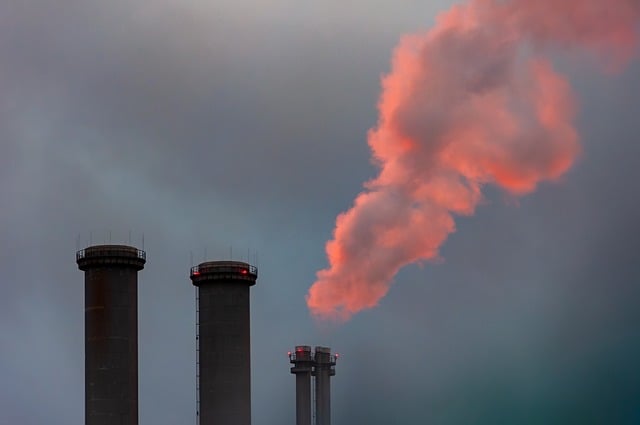
While the world focuses on Gaza's leadership changes, the more consequential story for global markets is playing out in the Strait of Hormuz. The IRGC permitted passage of 33 ships through the strait in a 24-hour period, according to Al Jazeera reports.
That number sounds routine, but it masks the underlying tension: the strait remains a choke point that Iran can close at will. The strait handles approximately 20% of global oil transit.Any disruption here sends shockwaves through energy markets. The 2025 Iran-Israel war demonstrated this vividly.When Iranian nuclear sites were bombed, the immediate market reaction was a spike in crude prices. The subsequent US-backed ceasefire and the reported 60-day ceasefire extension with Iran, including reopening of the strait, provided temporary relief.But temporary is the operative word. Here is what the data shows about regional risk factors:| Risk Factor | Current Status (May 2026) | Market Impact Potential |
|---|---|---|
| Strait of Hormuz transit | 33 ships/24hrs (operational) | Extreme (20% of global oil) |
| Iran-Israel ceasefire | 60-day extension reported | Moderate (temporary relief) |
| Gaza leadership strikes | Ongoing | Low (localized conflict) |
| Hezbollah-Israel clashes | Active along Lebanese river | Moderate (escalation risk) |
| Southern Syria clashes | Ongoing (July 2025-present) | Low (contained) |
The US-Iran peace deal talks, with Marco Rubio reportedly saying "Hopefully we can pull it off," indicate that diplomatic channels are active but fragile. The reopening of the Strait of Hormuz was a key condition.
However, the IRGC's permission of ship passage should not be interpreted as a permanent arrangement. It is a tactical pause, not a strategic shift.For anyone trading oil futures or managing energy exposure, the Strait of Hormuz is the single most important variable to track. Gaza's leadership changes are noise.The strait's status is signal. If you are building a home office essentials setup for remote trading or analysis, having a reliable energy market monitor is non-negotiable.The days of ignoring Middle Eastern geopolitics are over.Hezbollah's Enduring Support Why Military Pressure Isn't Working
The BBC report from southern Lebanon paints a picture that defies conventional military logic. Despite continuing Israeli attacks and occupation, many people in the south still believe Hezbollah is the only force capable of defending them.
This is not blind loyalty — it is a rational calculation based on lived experience. Israel and Hezbollah clashed along a strategic Lebanese river after overnight strikes, according to AP News.The 2024 Lebanon war and the subsequent 2026 Lebanon war show a pattern of escalation followed by ceasefire, then renewed conflict. The ceasefire that ended the 2024 war failed to stop the war with Israel.Now, with peace talks and a new ceasefire attempt, the same dynamic is repeating. Why does Hezbollah retain support despite the destruction?The answer lies in state failure. The Lebanese government cannot provide security, basic services, or economic stability.Hezbollah fills the vacuum. When Israeli airstrikes kill nine members of one family in Saksakiyeh, as BBC reported, the local population does not blame Hezbollah — they blame Israel.The group's narrative of resistance becomes self-fulfilling. This has direct implications for oil markets and regional stability.Hezbollah's rocket arsenal and its ability to strike deep into Israel mean that any escalation on the Lebanon front can quickly become a regional crisis. The 2025 Iran-Israel war demonstrated that secondary fronts can expand rapidly.If Hezbollah launches significant attacks, Israel's response could draw in Iran, disrupting energy infrastructure across the region. For the investor or analyst following these developments, the key insight is that military pressure alone will not resolve the Hezbollah threat.The organization's support is rooted in governance failures that no amount of airstrikes can fix. Until Lebanon has a functional state that provides security and services, Hezbollah will remain a potent force.That is a multi-decade problem, not a one-election fix. If you are reading this while tracking energy markets from a portable power station setup during a power outage, you understand the value of reliable intelligence.The Middle East is not going to stabilize anytime soon.The 2025 Iran-Israel War A Threshold Crossed
Al Jazeera's retrospective on 2025 calls it the year the Middle East crossed a threshold. Iran and Israel went to war.
Iranian nuclear sites were bombed by Israeli and American forces. Cities once far from frontlines were no longer insulated from conflict.This was not a proxy war — it was direct, state-on-state conflict with nuclear implications. The timeline is instructive.The 2024 Iran-Israel conflict involved the Damascus consulate strike, the Haniyeh assassination, and retaliatory strikes in April and October. But 2025 escalated dramatically into what Wikipedia terms the "Twelve-Day War," which included US strikes on Iran and Iranian strikes on Qatar.The ceasefire that followed was fragile, and the 2026 Iran war now looms. What does this mean for oil prices?Direct conflict between Iran and Israel is the nightmare scenario for energy markets. Iran sits on the world's fourth-largest oil reserves and controls the Strait of Hormuz.Israel has limited domestic production but is a major refining hub. A war that disrupts either country's energy infrastructure sends prices soaring.The US-backed Gaza peace deal showed that diplomacy can still work, as Al Jazeera noted. But that deal was brokered under the shadow of an ongoing Iran-Israel war.The question for 2026 is whether the lessons of 2025 will lead to sustainable peace or just a temporary pause before the next escalation. The data from ACLED's Middle East overview for July 2025 shows a surge in aid-related violence in Gaza and intensifying ground attacks.The Iran-Israel front saw unprecedented Israeli offensives on Iran. The region is not de-escalating — it is cycling through different theaters of conflict.For anyone tracking this for investment or security purposes, the 2025 threshold crossing is permanent. The Middle East is now a theater of direct state-on-state warfare, not just proxy conflicts.That changes the risk calculus for oil, shipping, and regional investments permanently.What the Iran Deal Talks Really Mean for Oil Prices
Marco Rubio's comment — "Hopefully we can pull it off" — captures the tentative nature of the US-Iran peace deal talks. The deal reportedly includes a 60-day ceasefire extension and the reopening of the Strait of Hormuz.
But hope is not a strategy, and the track record of US-Iran negotiations is littered with failed agreements. The IRGC's permission of 33 ships through the strait in 24 hours is a positive signal, but it is also a reminder of who controls the spigot.The IRGC can reverse course instantly. The 2025 war demonstrated that Iran is willing to use the strait as a weapon, and the US is willing to strike Iranian nuclear sites.The mutual deterrence is fragile. Here is the market context:| Scenario | Probability (Analyst Estimate) | Oil Price Impact |
|---|---|---|
| Full US-Iran deal with Hormuz guarantee | Low | -$5 to -$10/barrel |
| Ceasefire extension only | Moderate | Neutral to -$3 |
| Deal collapse, Hormuz disruption | Moderate | +$15 to +$25 |
| New Iran-Israel war | Low but rising | +$30+ |
The best outcome for oil markets is a comprehensive deal that guarantees Hormuz access and freezes Iran's nuclear program. But the 2025 war makes that harder, not easier.
Trust is destroyed. The US and Israel have demonstrated willingness to bomb Iranian nuclear sites.Iran has demonstrated willingness to retaliate through proxies and Hormuz disruption. The practical takeaway: do not bet on a sustainable deal.The 60-day extension buys time, but it does not resolve the underlying conflict. Iran wants sanctions relief and security guarantees.The US and Israel want nuclear dismantlement and proxy disarmament. Those positions are fundamentally incompatible without a major shift in regional alignment.For the reader managing energy exposure, the smart move is to hedge against disruption while maintaining cash for buying opportunities if a deal materializes. This is not the time for binary bets.The Middle East is in a multi-year period of volatility.The Fall of Assad and the New Syrian Battlefield
One of the most consequential developments of 2024-2025 was the fall of the Assad regime in Syria. The 2024 Syrian opposition offensives, combined with the Israeli invasion of Syria, reshaped the country's political landscape.
Southern Syria clashes have continued from April-May 2025 and July 2025 to the present. Syria matters for oil markets for two reasons.First, it borders Iraq, which is a major OPEC producer. Instability in Syria creates spillover risks for Iraqi oil infrastructure.Attacks on US bases in Iraq and Jordan during the Middle Eastern crisis demonstrated that Syria's chaos does not stay contained. Second, Syria hosts Iranian forces and Hezbollah fighters.The fall of Assad weakens Iran's supply lines to Hezbollah, which is a strategic positive for Israel but creates a power vacuum that other actors — including ISIS remnants and Turkish-backed groups — may fill. The result is a fragmented Syrian battlefield that could produce new threats.The Israeli invasion of Syria remains ongoing as of 2026. This is a significant military commitment that diverts resources from Gaza and Lebanon.The long-term strategic question is whether Israel can hold Syrian territory or whether this becomes another quagmire. For energy markets, the Syrian situation is a secondary factor compared to Iran and Hormuz, but it matters for the risk premium.Every additional front of conflict increases the probability of a wider regional war. Investors should watch for signs of escalation between Israel and Iranian forces in Syria, as that could be the trigger for a new round of conflict.Your Next Move How to Position for Middle East Volatility
The Middle East in May 2026 is not going to stabilize. The evidence is overwhelming: ongoing Gaza operations, Hezbollah clashes, Syrian instability, Iran-Israel tensions, and fragile peace deals that could collapse at any moment.
The only certainty is uncertainty, as the ACLED report noted. So what do you do?Whether you are an investor, a business owner, or someone concerned about energy costs, the answer is the same: prepare for volatility, not stability. First, diversify energy exposure.If your portfolio is heavy on oil futures, add hedging positions in renewable energy or natural gas. The Middle East crisis creates opportunities for energy alternatives, including portable power station manufacturers that see increased demand during grid disruptions.Second, build information resilience. The difference between winning and losing in volatile markets is the quality of your information flow.Invest in real-time news sources like Reuters, AP, and BBC. Set alerts for key variables: Strait of Hormuz transits, Iran deal negotiations, and Israeli military operations.Third, consider regional exposure carefully. The Arab-Israeli normalization process is paused.Investments in Gulf states that depend on regional stability are higher risk than they appear. The 2025 war showed that even Qatar, which hosted peace talks, was targeted by Iranian strikes.Fourth, prepare for the personal impact. If you work from home, ensure your home office essentials include backup power and reliable internet.Power outages in energy-exporting regions can ripple globally. A portable power station is not a luxury — it is a practical hedge against grid instability.The Middle East is entering 2026 with more unresolved conflicts than at any point in the past decade. The 2025 Gaza peace deal showed that diplomacy can work, but it also showed that war is always one miscalculation away.The smart play is to assume the worst and be pleasantly surprised by the best. That is not pessimism — it is realism based on the evidence.Affiliate Disclosure: This article contains affiliate links. If you purchase through these links, we may earn a small commission at no extra cost to you. We only recommend products we believe in.