Is the AI Bubble About to Burst? What Investors Should Watch in 2025

Quick Answer
The AI market is showing clear signs of a speculative bubble, but whether it will "burst" or simply deflate depends on whether revenue growth catches up to valuations. The evidence suggests significant market adjustments are likely starting late 2025 and extending into 2027, but the underlying technology is real—unlike the dot-com era, where many companies had no revenue at all.
• Best for: Investors and tech professionals who need to decide whether to ride the AI wave or hedge their bets before a potential correction. • Key point: The AI bubble is estimated to be 17 times larger than the dot-com bubble, measured by startup market cap gains of nearly $1 trillion in 12 months.• Bottom line: Proceed with caution. The AI boom is real, but current valuations are detached from earnings reality.Diversify your portfolio and avoid FOMO-driven bets on unprofitable AI startups.Why This Bubble Feels Different (Even If It's Bigger)
Let's get one thing straight: comparing the AI bubble to the dot-com bust isn't just lazy journalism—it's a useful historical anchor, but the differences matter more than the similarities. Analysts now estimate the AI bubble is 17 times larger than the dot-com bubble, with ten AI startups gaining nearly $1 trillion in market value over the past 12 months alone.
That's not a typo. A trillion dollars.In one year. But here's the twist: dot-com companies often had zero revenue.| Metric | Dot-Com Bubble (Late 1990s) | AI Bubble (2025) |
|---|---|---|
| Typical startup revenue | $0–$5M | $1B–$13B+ |
| Market cap gain (12 months) | ~$500B (est.) | ~$1 trillion |
| Public company involvement | Low | 30% of S&P 500 driven by top 5 AI companies |
| Infrastructure spending | Modest | Trillions projected (e.g., OpenAI plans $1.4T on data centers) |
So why is everyone panicking? Because the spending is outrunning the revenue.
Companies are betting two, three, four years into the future that they'll pull in enough to pay for the massive investments. The Richmond Fed data shows that AI-related equipment and software investment since ChatGPT's release has grown similarly to communications equipment during the early telecom boom—which ended in a spectacular bust.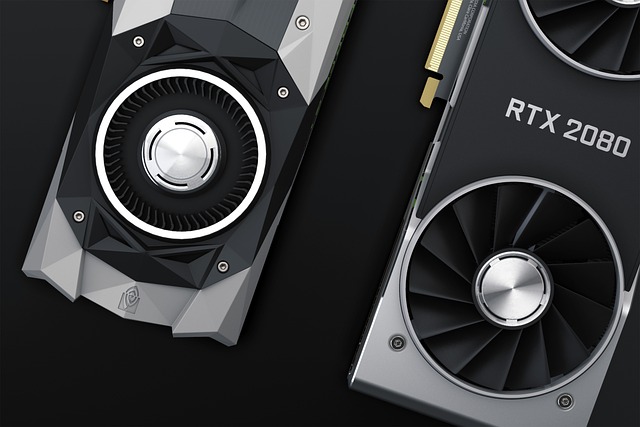
The Expert Consensus Is a Mess (And That's a Red Flag)
If you want to know whether a market is in a bubble, look at what the smartest people in the room are saying. Right now, they're shouting at each other from opposite rooftops.
On one side, you have analysts like Edward Zitron (who wrote extensively in 2025 about AI spending being written off) and Michael Burry, who disclosed shorts on Nvidia and Palantir, hardening his view that "almost all AI companies will go bankrupt." On the other side, Silicon Valley royalty like Ben Horowitz calls the idea of a demand problem "quite absurd," pointing to multiples against growth that don't look bubbly. JPMorgan Chase executive Mary Callahan Erdoes called calling AI a bubble "a crazy concept," saying we're "on the precipice of a major, major revolution." Meanwhile, the Financial Times has published over 100 articles invoking the "AI bubble." That's not hyperbole—that's a media narrative that's become self-reinforcing.| Expert/Institution | Stance | Key Quote/Claim |
|---|---|---|
| Michael Burry | Bearish | "Almost all AI companies will go bankrupt" |
| Ben Horowitz | Bullish | "If you look at multiples against growth, it doesn't look like a bubble" |
| Mary Callahan Erdoes (JPMorgan) | Bullish | "We are on the precipice of a major revolution" |
| Richmond Fed | Cautious | AI investment growth mirrors telecom boom (which busted) |
| CNN analyst | Bearish | AI bubble is "17 times bigger than dot-com" |
Here's my take: when the smart money is divided this sharply, it usually means one side is wrong and the other is early. The problem is that bubbles don't burst when everyone sees them coming—they burst when the last buyer runs out of money.
And right now, there's still a massive amount of capital flowing in. As one YouTube commentator put it, "Money is not going anywhere; it is like investors are going to pull out their money and invest it elsewhere." That's the crux: capital rotation, not evaporation.The warning sign isn't the disagreement. It's that the bulls are betting on a future that may take years to materialize, while the bears are betting on a correction that could happen any quarter.The market hates uncertainty, and right now, uncertainty is the only certainty.The Data Centers Are the Canary in the Coal Mine
If you want to understand the AI bubble's physical footprint, look at the data centers. This isn't abstract speculation—it's concrete, steel, and energy.
OpenAI has said it plans to spend $1.4 trillion on data centers over the next eight years. That's not just big; it's historically unprecedented.The Richmond Fed's analysis shows that real investment in AI-related categories of information processing equipment and software has skyrocketed since late 2022, matching the growth trajectory of the telecom boom in the early 2000s. Here's the problem: that telecom boom ended with billions of dollars of fiber optic cable buried underground that nobody used.Companies like Global Crossing and WorldCom went bankrupt because they built capacity for a future that arrived slower than expected. The same risk exists today.Data centers are being built at a pace that assumes AI adoption will explode exponentially. But actual business adoption is more modest.| Metric | Telecom Boom (1998–2001) | AI Boom (2023–2025) |
|---|---|---|
| Infrastructure investment | ~$500B | $1.4T planned by OpenAI alone |
| Business adoption rate (2 years after peak) | ~5% | ~10% (Census Bureau: 3.7% in Sep 2023 → ~10% by Sep 2025) |
| Major bankruptcies | Global Crossing, WorldCom | TBD |
The Census Bureau data shows that the share of businesses using AI over the past two weeks more than doubled from 3.7% in September 2023 to nearly 10% by September 2025. That's growth, no question.
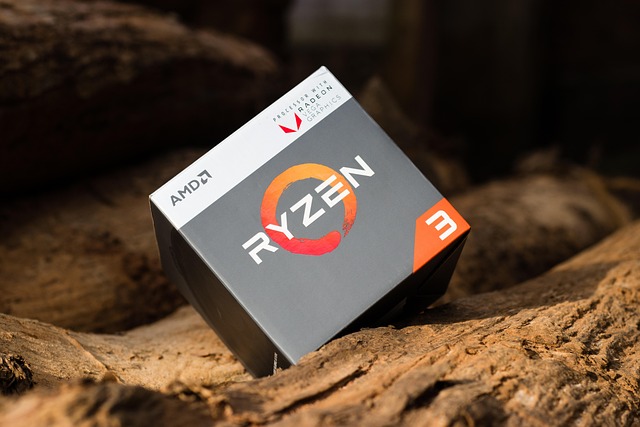
But it's still only 10%. If you're building infrastructure for a world where 80% of businesses use AI, but only 10% actually do, you have a massive oversupply problem.This is where the hardware angle matters. Companies building AI systems are buying NVIDIA GeForce RTX 4090 GPUs and AMD Ryzen 9 7950X processors by the pallet.The Samsung 990 Pro 2TB NVMe SSD is becoming standard for high-speed data access. These are real, tangible products with real supply chains.But if the demand for AI services doesn't keep pace, that hardware becomes stranded assets—beautiful, expensive paperweights. The next section will address what you, as an investor, should actually do about this.Because sitting on the sidelines isn't smart either.What Investors Should Actually Do (Instead of Panicking)
Let's cut through the noise. You're reading this because you either have money in AI stocks or you're thinking about putting money in.
Here's my direct advice, based on the evidence we have:First, understand that not all AI is a bubble. The distinction matters. Companies like Nvidia and OpenAI have real revenue.
Nvidia's GPUs are essential infrastructure. The risk isn't that AI disappears—it's that the market has priced in 10 years of growth in 2 years.That means even if the technology succeeds, stock prices could still fall 30-50% if growth merely decelerates. Second, look at the timeline. Predictions suggest significant market adjustments beginning in late 2025 and extending through 2027.We're currently in June 2026. That means we're smack in the middle of the danger zone.If you're holding speculative AI stocks with no earnings, the window to sell at a reasonable price may be closing. Third, consider the capital rotation argument. One YouTube analyst noted that "money is not going anywhere; it is like investors are going to pull out their money and invest it elsewhere." That's the key insight: a bubble burst doesn't destroy capital, it reallocates it.The question is where it goes next. Sectors like clean energy, healthcare, or defense could benefit from an AI pullback.| Action | Risk Level | Why |
|---|---|---|
| Hold Nvidia/AMD | Medium | Real revenue, but priced for perfection |
| Sell unprofitable AI startups | Low | They'll likely go bankrupt first |
| Buy AI infrastructure ETFs | Medium-High | Data center buildout is real, but oversupply risk |
| Go short (like Burry) | Very High | You're betting against the Fed and herd mentality |
Fourth, don't confuse the technology with the stock. AI is genuinely transformative. The Richmond Fed notes that business AI adoption doubled from 3.7% to nearly 10% in two years.
That's real. But even transformative technologies can have catastrophic stock bubbles.The internet didn't die in 2001, but Amazon stock fell 95% from its peak. If you bought at the top, you waited 10 years to break even.Fifth, have a plan for hardware plays. If you're building a personal AI rig, the NVIDIA GeForce RTX 4090 and Samsung 990 Pro 2TB NVMe SSD are excellent choices—prices have actually come down as supply catches up. The AMD Ryzen 9 7950X is also solid.But don't confuse personal purchases with investment signals. Hardware pricing is driven by supply chain dynamics, not just AI hype.The bottom line: be greedy when others are fearful, but don't be stupid when others are euphoric. The AI bubble will likely burst—but not because AI fails.Because markets overshoot.The Three Scenarios for 2026-2027
Let's game this out. Based on the evidence from multiple sources, here are the three most likely outcomes for the AI market through 2027.
Scenario 1: The Soft Landing (40% probability)AI revenue grows fast enough to justify current valuations over 3-5 years. OpenAI hits $20 billion in annual revenue (as Sam Altman has claimed), Anthropic doubles to $18 billion, and other players follow.The market corrects modestly (10-20%) but doesn't crash. This is what the bulls are betting on.It's possible—but it requires near-perfect execution and continued massive spending. The Richmond Fed's data shows AI investment growing at telecom-boom rates, which historically doesn't end softly.Scenario 2: The Correction (35% probability)
Valuations adjust significantly (30-50%) as investors realize that earnings can't keep up with spending. This is the "significant market adjustments beginning in late 2025, extending through 2027" scenario.We're already seeing signs: the New York Times reported that Wall Street is "shaking off fears" for now, but that's exactly what happens before corrections. Multiple AI startups with no clear path to profitability will fail.Hardware companies like Nvidia will see revenue dip but survive. This is my base case.Scenario 3: The Full Bust (25% probability)
Everything collapses. AI spending gets written off.Michael Burry's prediction comes true: "almost all AI companies will go bankrupt." This would require a macroeconomic shock (recession, interest rate spike) on top of the AI overvaluation. The 17x dot-com comparison suggests this is possible, but I think it's less likely because AI has more real-world utility than most dot-com companies.Still, the Financial Times has published over 100 articles on the AI bubble—when the media becomes obsessed with a narrative, it often becomes self-fulfilling.
| Scenario | Market Impact | Timeline | Key Trigger |
|---|---|---|---|
| Soft Landing | -10% to -20% | 2026-2028 | Revenue growth catches up |
| Correction | -30% to -50% | Late 2025-2027 | Earnings misses |
| Full Bust | -60% to -80% | 2026-2027 | Macroeconomic shock + AI overvaluation |
The most important variable? Interest rates.
If the Fed keeps rates high, speculative AI investments become less attractive. If rates drop, the party continues.Keep your eye on that, not on the latest ChatGPT update.Frequently Asked Questions
Is it too late to invest in AI stocks?
No, but the easy money has been made. Current valuations are high, and the market is overdue for a correction.
If you're investing for the long term (5+ years), dollar-cost averaging into established players like Nvidia or Microsoft is reasonable. Avoid buying at all-time highs with leverage.Will AI companies like OpenAI and Anthropic survive a bubble burst?
Probably, but not at their current valuations. OpenAI has real revenue ($13 billion annually, reportedly growing toward $20 billion) and a clear product.
Anthropic is targeting $9 billion in run-rate. They'll survive, but their stock (if they go public) could trade 40-60% lower during a correction.They'll be fine in 2030; 2027 might be brutal.How does the AI bubble compare to the 2008 financial crisis?
The 2008 crisis was driven by systemic risk in mortgage-backed securities—opaque, leveraged, and interconnected. The AI bubble is more like the dot-com bust: overvaluation driven by hype, not hidden debt.
The Washington Post noted that the "deal and spending euphoria" draws parallels to both, but structurally, it's closer to 2000 than 2008.Should I sell my NVIDIA RTX 4090 and other AI hardware?
No—unless you bought it as a speculative investment. The hardware itself is useful and prices are stable.
The Samsung 990 Pro 2TB NVMe SSD and AMD Ryzen 9 7950X are excellent products that will serve you well for years. The bubble is in stock valuations, not in the physical products.Keep your gear; sell your overpriced stocks.What's the single best indicator to watch for a bubble burst?
Watch AI company earnings calls and capital spending announcements. If major players like OpenAI or Microsoft announce spending cuts or revenue misses, that's the signal.
Also track the Richmond Fed's AI investment data—if the growth rate of AI-related equipment investment starts to decelerate, the bubble is deflating.Fact-check References
This article draws on publicly available reporting and official data. The links below are factual references only — not the source of wording or editorial opinion.
- https://www.cnn.com/2025/10/18/business/ai-bubble-analyst-nightcap — checked 2026-06-05
- https://en.wikipedia.org/wiki/AI_bubble — checked 2026-06-05
- https://discoveryalert.com.au/capital-concentration-technology-markets-systemic-... — checked 2026-06-05
- https://www.youtube.com/watch?v=ycc9qyTCnpA — checked 2026-06-05
- https://www.cnbc.com/2025/10/21/are-we-in-an-ai-bubble.html — checked 2026-06-05
Affiliate Disclosure: This article contains affiliate links. If you purchase through these links, we may earn a small commission at no extra cost to you. We only recommend products we believe in.