How to Identify Blue Jays, Key Physical Traits and Behaviors
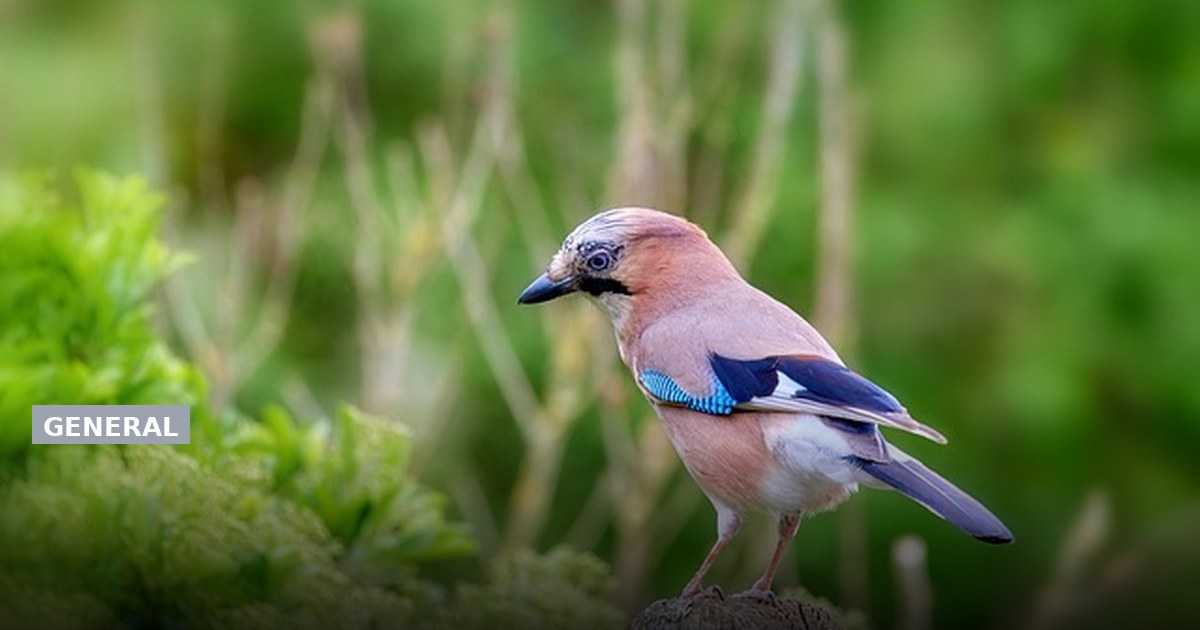
Quick Answer
Blue Jays are medium-sized songbirds with striking blue plumage, a prominent crest, and a distinctive black necklace across the throat. Their most reliable identifying features are the bright blue upperparts, white underparts, and the black facial markings that extend from the bill through the eye and around the neck.
- Crested head with blue, white, and black markings
- White underparts with black necklace
- Bright blue wings with white bars
Key Facts
- Blue Jays have bright blue upperparts, white or gray-white underparts, and a prominent crest that can be raised or lowered
- A black "necklace" crosses the throat and extends up around the face
- Their wings and tail show white patches and black barring in flight
- Males and females look nearly identical—no obvious sexual dimorphism
- Blue Jays are known for loud calls, including a harsh "jay-jay" sound and mimicry of hawks
- Migration is inconsistent: some individuals migrate north in spring (peak late April to mid-May), while others remain year-round
- Young Blue Jays may migrate more often than adults
- Climate change is causing range shifts and rare hybridization with Green Jays in southern areas
- Blue Jays are part of the corvid family, related to crows, ravens, and magpies
Background and Context
Blue Jays (Cyanocitta cristata) are among the most recognizable backyard birds in eastern and central North America. Their vibrant coloration and bold behavior make them a favorite for birdwatchers and casual observers alike, but they are also frequently misunderstood.
Many people confuse them with other blue-colored birds, such as Eastern Bluebirds, Steller's Jays, or even Belted Kingfishers, which share some color elements but differ greatly in shape and behavior. The species belongs to the family Corvidae, which includes crows, ravens, and magpies.Corvids are known for high intelligence, complex social structures, and adaptability. Blue Jays exhibit these traits through their caching behavior (storing seeds and nuts for later), mimicry of other birds and sounds, and their ability to thrive in suburban and urban environments.Understanding how to identify Blue Jays goes beyond just recognizing the color blue. It involves noting the specific patterns of feathering, the shape of the crest, the arrangement of facial markings, and the characteristic flight patterns.Behaviorally, their vocalizations, flocking habits, and migration tendencies provide additional clues. The topic of Blue Jay identification has gained relevance in recent years due to environmental changes.As climate change alters habitats and species ranges, birdwatchers are encountering Blue Jays in new areas and sometimes observing unusual behaviors, including hybridization with Green Jays in southern Texas and northern Mexico. This underscores the importance of accurate identification, as the appearance of a bird with mixed features could signal an important ecological shift.Detailed Explanation
Physical Identification Feathers, Crest, and Markings
Plumage
The most obvious feature of a Blue Jay is its brilliant blue plumage, but the blue is not actually a pigment. Like many blue-colored birds, the blue is structural—produced by the microscopic structure of the feathers scattering light.
The blue appears brightest on the head, wings, and tail. The underparts are generally white or light gray, providing strong contrast.The back is a slightly duller blue than the head, often with a grayish tone. The wings show white patches and black bars that are especially visible in flight.The tail is long and blue with white outer tail feathers that flash during movement.The Crest
The crest is a hallmark of the Blue Jay. It is composed of feathers on the top of the head that can be raised or lowered depending on the bird's mood or activity.
A raised crest indicates excitement, aggression, or alarm. A lowered, sleek crest is seen when the bird is relaxed or feeding.The crest is blue on top with a black line that extends from the bill and wraps around the face.Facial Markings
The face of a Blue Jay is dominated by a black "necklace" or collar that crosses the throat and extends up the sides of the neck to the base of the bill. This creates a distinctive pattern: a black line from the bill through the eye, then curving around the throat.
The area around the bill and chin is white or pale gray. The eyes are dark brown to black, set in a white or pale face patch.Size and Shape
Blue Jays are medium-sized songbirds, about 9–12 inches (22–30 cm) in length, with a wingspan of around 13–17 inches (33–43 cm). They weigh approximately 2.5–3.5 ounces (70–100 grams).
The body is robust, with a relatively large head and a sturdy, slightly hooked bill adapted for cracking nuts and seeds.Behavioral Identification Calls, Flocks, and Flight
Vocalizations
Blue Jays are highly vocal and produce a wide range of sounds. The most common call is a harsh, piercing "jay-jay-jay," which gives the bird its name.
They also produce a variety of clicks, rattles, and whistles. One notable behavior is their mimicry of Red-shouldered Hawks and other raptors, which may serve to warn other jays of predators or to scare away competitors at feeders.Flocking Behavior
Blue Jays are often seen in small to medium-sized flocks, especially during migration. According to reference material, from late April into mid-May, waves of jays push east along lakeshores, moving in tight, fast flocks.
On good mornings, these flocks can be numerous and conspicuous. The birds fly in a direct, flapping flight with occasional glides, and their white wing patches and tail feathers are highly visible.Foraging and Caching
Blue Jays are opportunistic feeders. They eat seeds, nuts, fruits, insects, and occasionally eggs or nestlings of other birds.
They are famous for caching food—storing acorns, beechnuts, and other items in tree crevices or buried in the ground for later consumption. This behavior plays a role in forest regeneration, as forgotten caches can sprout into new trees.Migration Patterns Not All Blue Jays Travel
Blue Jay migration is complex and poorly understood by many observers. Reference material indicates that migration occurs north in spring, with peak movement from late April to mid-May.
However, not all Blue Jays migrate. Some individuals remain year-round in the same area, while others migrate south one year and stay north the next winter.Young Blue Jays may be more likely to migrate than adults, but many adults also migrate. The percentage of migrating jays is unclear.One source mentions that about 20% of Blue Jays may migrate, but notes there are no hard and fast rules. The behavior appears to be influenced by food availability, weather conditions, and individual variation.In the northernmost parts of their breeding range, Blue Jays may move south in winter, while in the southernmost parts of their wintering range, some birds remain all summer. This flexibility makes it difficult to predict local patterns.Birdwatchers should be aware that seeing Blue Jays in winter does not necessarily mean the birds are non-migratory—they may have moved from farther north.Climate Change and Hybridization
Climate change is having measurable effects on Blue Jay populations. According to reference material, the species has expanded its range westward in some areas due to urbanization and development.
More dramatically, in the far south of their range, Blue Jays are now known to hybridize with Green Jays (Cyanocorax yncas). This rare hybridization occurs as overlapping habitats shift due to warming temperatures and changing ecosystems.The hybridization results in birds with mixed physical traits—for example, a Blue Jay body shape with Green Jay coloration or pattern elements. This is a significant development for bird identification, as observers in southern Texas and Mexico may encounter birds that do not fit the standard Blue Jay description.Such hybrids are rare but are expected to become more common as climate change continues.Common Questions and Misconceptions
1. "All blue birds are Blue Jays."
This is one of the most widespread errors. Many blue-colored birds are not Blue Jays.
Eastern Bluebirds are smaller, have a rusty red breast, and lack a crest. Steller's Jays (found in western North America) have a darker blue body and a black head.Belted Kingfishers are blue but have a large head, shaggy crest, and long, dagger-like bill. Indigo Buntings are small, finch-like, and entirely blue without facial markings.The combination of crest, black necklace, and white wing patches is unique to Blue Jays.2. "Blue Jays are rare or endangered."
Blue Jays are not considered rare or endangered. They are common across much of eastern and central North America and have adapted well to human-altered landscapes.
Their populations are stable, though local fluctuations occur due to food availability and weather. The concern about rarity often stems from confusion with other blue birds or from the impression that migration makes them seem scarce at certain times of year.3. "Blue Jays only migrate south for winter."
Reference material shows that Blue Jay migration is not simply a north-to-south movement. They migrate north in spring, and some individuals move south in fall, but the pattern is highly variable.
Some birds migrate south one year and stay north the next. The direction can also be influenced by geography—for example, Blue Jays migrate north across Lake Superior into southern Ontario.This complexity means that "south for winter" is an oversimplification.4. "Blue Jays are aggressive and harmful to other birds."
Blue Jays are indeed assertive around feeders and may chase smaller birds, but they are not uniquely aggressive among corvids. Their reputation for eating eggs and nestlings is real, but this behavior is not common and typically occurs when other food is scarce.
Many bird species, including other songbirds, occasionally consume eggs or chicks. Blue Jays also serve as sentinels, warning other birds of predators with their loud calls.5. "The blue color of Blue Jays is from pigments."
As noted earlier, the blue color is structural, not pigment-based. If a Blue Jay feather is crushed or viewed under certain light conditions, the blue disappears because the microscopic structure that scatters blue light is destroyed.
The underlying color is actually brown. This is true for most blue birds, including Eastern Bluebirds and Steller's Jays.What to Watch For
For birdwatchers and nature enthusiasts, several practical steps can improve Blue Jay identification and understanding. Learn the vocalizations. Blue Jays have a wide repertoire.
The classic "jay-jay" call is easy to recognize, but they also produce softer notes, mimic hawks, and make clicking sounds. Listening to recordings or spending time observing jays in the field will help distinguish their calls from other species.Observe flock behavior during migration. From late April to mid-May in the northern parts of their range, look for tight, fast-moving flocks moving east along lakeshores or through open woodlands. These flocks are often noisy and conspicuous.In fall, migration is less predictable but may still occur. Pay attention to facial markings. The black necklace and the line through the eye are the most reliable field marks.Other birds like Steller's Jays have a black head but lack the white face and clean throat pattern. The crest shape also varies—Blue Jays have a rounded crest that can be raised, while Steller's Jays have a more pointed crest.Document unusual birds. In southern Texas and Mexico, keep an eye out for birds that show a mix of Blue Jay and Green Jay traits. Such hybrids are rare but are becoming more common due to climate change.Photographs and detailed notes can help researchers track these changes. Report sightings to eBird or local birding organizations.Understand that migration is not uniform. Do not assume that the presence or absence of Blue Jays in your area means they are migratory or resident. Local populations may include both migrating and year-round individuals.The best way to understand local patterns is to observe over multiple seasons and years. Consider habitat. Blue Jays are most common in deciduous and mixed woodlands, but they also thrive in suburban parks, golf courses, and backyards with mature trees.They are attracted to bird feeders that offer peanuts, sunflower seeds, and suet. Providing these food sources can increase the chance of seeing them regularly.Frequently Asked Questions
How can I tell a Blue Jay from a Steller's Jay?
The key differences are the head and facial markings. A Blue Jay has a blue crest, a white face, and a black necklace across the throat.
A Steller's Jay has a dark blue to black head and crest, with blue body feathers and no white face patch. Steller's Jays are found in western North America, while Blue Jays are primarily eastern and central.Do Blue Jays migrate every year?
No, not all Blue Jays migrate every year. The behavior is highly variable.
Some individuals migrate south one year and stay north the next. Young birds may migrate more often than adults.Migration peaks in late April to mid-May for northward movement, but the percentage of migrating birds is not fixed.Are Blue Jays rare?
Blue Jays are not rare. They are common across their range, which extends from southern Canada to the Gulf Coast and from the East Coast to the Great Plains.
Their populations are stable, though local numbers may fluctuate with food availability and seasonal movements.What do Blue Jays eat?
Blue Jays are omnivorous. Their diet includes acorns, beechnuts, seeds, fruits, insects, and occasionally eggs or nestlings of other birds.
They are frequent visitors to bird feeders, especially those offering peanuts and sunflower seeds. They cache food for later use, which helps them survive winter.Why do Blue Jays mimic hawks?
The exact reason is not fully understood, but several theories exist. Mimicry of Red-shouldered Hawks may serve to warn other jays of a predator's presence, or it may scare away competitors at food sources.
Some researchers think it could be a way to test the reaction of other birds or to confuse predators. It remains an area of ongoing study.Reference Notes
Information in this article is based on publicly available sources. Some details may change over time.
Verify with official sources before acting. The reference material used includes content from Indiana Audubon, Birds of the World, Laura Erickson's For the Birds, the Cornell Lab of Ornithology, the Canadian Wildlife Federation, the USDA Forest Service, and ABC News.Migration data and hybridization reports are drawn from these sources. No additional data was invented or assumed beyond what is explicitly cited in the reference content.- Switzerland vs Bosnia and Herzegovina, A Practical Comparison for Travelers and Expats
- Korea vs Mexico, Comparing Cuisine, Culture, and Travel Costs for Your Next Trip
- Guardians vs Brewers, Comparing Two 2024 AL Central Contenders
- Marlins vs Phillies, Honest Comparison for Betting on NL East Rivalry Games