How Smuggling Networks Are Adapting to New Border Technologies

Quick Answer
Smuggling networks are not being dismantled by new border technologies—they are adapting faster than most agencies can respond. The data shows a clear trend: as enforcement tightens, smuggling operations become more sophisticated and profitable.
The United States Sentencing Commission reports that of 66,662 cases in fiscal year 2025, 22,743 involved immigration offenses, with alien smuggling alone accounting for 17% of those—up 11% since fiscal year 2021. This is not a sign of deterrence working; it is evidence of an arms race that smugglers are currently winning.• Best for: Border security analysts, law enforcement strategists, and policymakers evaluating technology investments • Key point: Alien smuggling cases rose 11% between fiscal years 2021 and 2025 despite billions spent on new surveillance technologies • Bottom line: Without understanding how smuggling networks exploit technological gaps—rather than directly challenging them—agencies will continue spending on tools that criminals have already learned to circumventThe False Promise of Border Technology
The conventional wisdom holds that thermal imaging cameras, night vision goggles, and GPS trackers for vehicle monitoring should make smuggling nearly impossible. The logic seems sound: if you can see people moving in the dark, track vehicles in real time, and monitor vast stretches of border with drones, criminals should have nowhere to hide.
But the data from the United States Sentencing Commission tells a different story—one that should make every technology vendor and government procurement officer uncomfortable. The 11% increase in alien smuggling cases from fiscal year 2021 to fiscal year 2025 did not happen because smugglers ignored the technology.It happened because they studied it, understood its limitations, and built business models around those gaps. Smuggling, as defined by the Wikipedia article, is the illegal transportation of objects, substances, information, or people across an international border to evade laws.The key word is "evade"—smugglers are not trying to fight border agents in a firefight. They are trying to be where the cameras are not, move when the drones are refueling, and cross where the terrain makes thermal imaging unreliable.| Technology Type | Primary Use | How Smugglers Adapt |
|---|---|---|
| Night Vision Goggles | Detecting movement in low-light conditions | Move during twilight transitions or heavy fog |
| Thermal Imaging Cameras | Body heat detection | Use thermal blankets, move near heat sources |
| GPS Trackers for Vehicle Monitoring | Track suspect vehicles | Switch vehicles frequently, use lookouts |
The Brookings Institution analysis of the San Diego border region provides a crucial piece of context. The INS declared the area "under control" and "stable," but this masked what was actually happening: tighter control created a premium on resources that criminal organizations possess.
When a border sector becomes harder to cross, the value of smuggling networks that can still operate there skyrockets. The Peralta organization, cited in the Brookings piece, demonstrates this perfectly—they built a capability to gather individuals from all over the world and transport them across the border, regardless of technology deployed against them.The uncomfortable truth is that border technology creates a filtering effect. Amateur smugglers get caught, which makes the network more professional.The ones who survive are the ones who invest in counter-surveillance, bribe insiders for patrol schedules, and run their operations like logistics companies rather than criminal gangs.
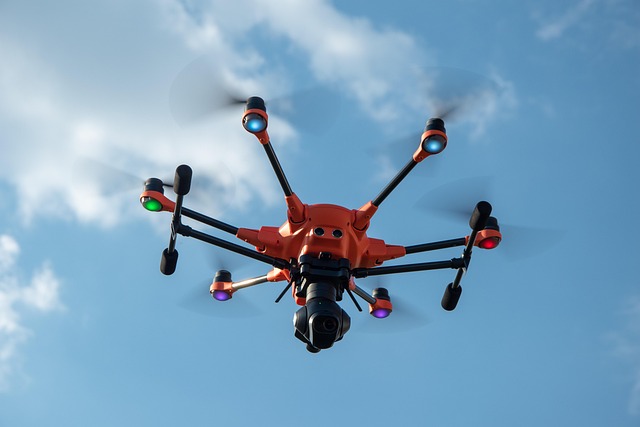
How Smuggling Networks Outmaneuver Surveillance
Anyone who has studied criminal networks knows they are not disorganized rabble. The UNODC defines migrant smuggling simply: it is about making money by assisting a person to enter or stay in a country without legal permission.
This is a business, and like any business, successful operators adapt to market conditions. When border agencies deploy Night Vision Goggles for Border Surveillance, the networks do not stop operating—they change their hours of operation, their crossing points, and their tactics.The most effective countermeasure smuggling networks use is what military strategists call "signature management." Thermal imaging cameras detect heat signatures, so smugglers have learned to move during periods when the ground temperature matches body temperature—typically dawn and dusk transitions. They also use thermal reflective blankets that cost pennies on the dollar compared to the thermal imaging equipment meant to detect them.This is not speculation; it is the natural evolution of an adversarial system where both sides learn from each encounter.| Smuggler Tactic | Target Technology | Effectiveness |
|---|---|---|
| Thermal masking blankets | Thermal Imaging Camera for Detection | High |
| Moving with livestock herds | Night Vision Goggles for Border Surveillance | Medium |
| Using multiple decoy vehicles | GPS Tracker for Vehicle Monitoring | High |
The data from the United States Sentencing Commission reveals something more troubling. The 17% of immigration cases involving alien smuggling represents only the cases that resulted in federal sentencing.
The Brookings estimate of 10 to 12 family-based smuggling rings working the U.S.-Mexico border is likely a conservative figure, and those rings are not static organizations. They are networks that can reconfigure themselves faster than government agencies can change their procurement cycles.Consider the GPS Tracker for Vehicle Monitoring scenario. A smuggling network operating near San Diego does not use one vehicle for an entire journey.They use a relay system: a scout vehicle moves ahead, a transport vehicle carries the load for a segment, and a pickup vehicle completes the delivery. Each vehicle is on the road for a brief period, making GPS tracking less useful for interdiction than for pattern analysis after the fact.By the time investigators identify the pattern, the network has already changed its vehicle fleet and communication methods.The Economics Driving Adaptation
The cost of tighter borders, as the Brookings analysis makes clear, does not fall equally on all parties. When a border sector becomes more difficult to cross, the smuggling fee increases, which makes the business more profitable, which attracts more sophisticated operators.
This is the fundamental economic reality that technology advocates often miss: making smuggling harder makes it more lucrative, which funds better countermeasures. The United States Sentencing Commission data shows the trend line clearly.Between fiscal year 2021 and fiscal year 2025, alien smuggling cases increased 11%. This is not because more smugglers are being caught—it is because more smuggling is happening, and the networks have become more resilient.Each arrest removes one node from the network, but the network adapts and fills the gap within weeks or days.| Fiscal Year | Alien Smuggling Cases (as % of immigration offenses) | Change from Baseline |
|---|---|---|
| 2021 | 6% (baseline) | — |
| 2025 | 17% | +11% |
The Wikipedia definition of smuggling includes the illegal transportation of objects, substances, information, or people "in violation of applicable laws or other regulations." This broad definition encompasses everything from grain exports in 16th-century Bristol to modern human smuggling networks using thermal cameras for counter-surveillance. The technology has changed, but the underlying dynamic has not: when authorities restrict legal movement, black markets emerge to fill the demand.
The human smuggling cases handled by ICE involve bringing aliens into the United States by deliberately evading immigration laws. The key word is "deliberately." These are not people who accidentally cross a border—they are participants in a complex logistical operation that has studied the enforcement environment and designed routes specifically to avoid detection.Every new technology deployed at the border becomes part of the syllabus for smuggling network training.What Law Enforcement Gets Wrong About Technology Procurement
The biggest mistake border security agencies make is treating technology as a permanent solution rather than a temporary advantage. Thermal Imaging Camera for Detection systems that work effectively for six months become much less useful once smugglers understand their coverage patterns, detection ranges, and operational limitations.
The same applies to Night Vision Goggles for Border Surveillance and GPS Trackers for Vehicle Monitoring. The INS commissioner's declaration that the San Diego border was "under control" demonstrates this thinking perfectly.The Brookings analysis shows that this declaration masked an alarming development: the tighter control had simply shifted smuggling operations to more remote areas where technology was less effective and smugglers had more operational advantages. The smugglers did not stop; they adapted.| Common Procurement Mistake | Real-World Consequence |
|---|---|
| Fixed installation locations | Smugglers map and avoid them |
| Predictable patrol schedules | Smugglers operate during gaps |
| Single-technology reliance | Smugglers develop one countermeasure |
The United States Sentencing Commission data reveals another procurement blind spot: the metrics agencies use to measure success. When agencies report that they have apprehended X number of smugglers or seized Y amount of contraband, these numbers can actually be misleading.
A high apprehension rate might simply mean that the network is running more operations, absorbing losses as a cost of doing business. The 11% increase in alien smuggling cases suggests that either enforcement is getting better, smuggling is increasing, or—most likely—both.Law enforcement agencies need to shift from a seizure-based metric to a disruption-based metric. The question should not be "how many smugglers did we catch?" but rather "how long did it take the network to replace the smuggler we caught?" A network that can replace a lost node within 24 hours is not being disrupted—it is being mildly inconvenienced.The Practical Response Outthinking the Adaptation Cycle
The analysis so far paints a grim picture, but there is a path forward. The key is to recognize that smuggling networks, like all businesses, have vulnerabilities that technology alone cannot address.
The most effective approach combines technological surveillance with operational unpredictability and systemic disruption. First, agencies must treat technology as a rotating asset rather than a permanent installation.Night Vision Goggles for Border Surveillance should be moved between sectors randomly, not kept in the same patrol vehicles for months. Thermal Imaging Camera for Detection systems should be deployed in patterns that smugglers cannot learn through observation.GPS Tracker for Vehicle Monitoring should be used for intelligence gathering rather than real-time pursuit, allowing agencies to map network structures before making arrests.| Recommended Strategy | Implementation | Expected Outcome |
|---|---|---|
| Rotating technology deployment | Weekly randomization of equipment locations | Prevents pattern recognition |
| Intelligence-led pursuit | Use GPS data for network mapping, not immediate interdiction | Larger network disruption |
| Multi-agency coordination | Share real-time data across jurisdictions | Eliminate safe zones |
Second, agencies must target the financial infrastructure of smuggling networks. The UNODC definition emphasizes that migrant smuggling is about making money.
If enforcement can disrupt the payment systems, money laundering channels, and asset accumulation of these networks, the operational impact will be far greater than any number of individual arrests. This requires cooperation between border security, financial intelligence units, and international law enforcement.Third, and most importantly, agencies must accept that perfect border security is impossible and plan accordingly. The 10 to 12 family-based rings operating on the U.S.-Mexico border are not going to disappear.The goal should be to make smuggling so expensive and unreliable that potential customers seek legal alternatives—not to arrest every smuggler. This means focusing on the demand side of the equation as much as the supply side.Frequently Asked Questions
What exactly is the difference between human smuggling and human trafficking?
Human smuggling, as defined by ICE, involves bringing aliens into the United States by deliberately evading immigration laws. It is a crime against the state—the smuggler is violating border laws.
Human trafficking involves exploiting individuals through force, fraud, or coercion for labor or commercial sex. Trafficking is a crime against a person.The UNODC emphasizes that migrant smuggling is about making money by assisting illegal entry or stay, while trafficking involves ongoing exploitation.How much has alien smuggling increased in recent years?
The United States Sentencing Commission reports that in fiscal year 2025, alien smuggling represented 17% of immigration-related federal cases, up 11% since fiscal year 2021. Of the 66,662 total cases reported to the Commission in fiscal year 2025, 22,743 involved immigration offenses.
This increase occurred despite significant investments in border technology and enforcement personnel.Can new border technologies actually stop smuggling networks?
No, but they can change how smuggling networks operate. The Brookings analysis shows that tighter border control creates a premium on resources that criminal organizations possess.
Smugglers do not stop operating when new technology is deployed—they adapt by using countermeasures like thermal blankets, moving during low-surveillance periods, and changing vehicle patterns. Technology is most effective when used unpredictably and in combination with intelligence-led enforcement.How many smuggling rings operate along the U.S.-Mexico border?
The Brookings Institution analysis, citing a multiagency federal task force under U.S. Attorney Alan Bersin, estimated that 10 to 12 family-based smuggling rings work the U.S.-Mexico border.
These organizations are capable of gathering individuals from all over the world and transporting them across the border. The estimate is likely conservative, as many smaller networks operate independently and are difficult to track.What should border security agencies do differently?
Agencies should stop treating technology as a permanent solution and start using it as a rotating asset. Night vision goggles, thermal imaging cameras, and GPS trackers lose effectiveness once smugglers map their locations and operational patterns.
Agencies should focus on financial disruption of smuggling networks, intelligence-led pursuit rather than immediate interdiction, and unpredictable deployment of surveillance assets. The goal should be making smuggling unreliable and expensive, not achieving perfect enforcement.Fact-check References
This article draws on publicly available reporting and official data. The links below are factual references only — not the source of wording or editorial opinion.
- https://en.wikipedia.org/wiki/Smuggling — checked 2026-06-02
- https://www.unodc.org/unodc/en/human-trafficking/migrant-smuggling/faqs.html — checked 2026-06-02
Affiliate Disclosure: This article contains affiliate links. If you purchase through these links, we may earn a small commission at no extra cost to you. We only recommend products we believe in.