How a Tyrannosaurus Rex Fossil Is Preserved and Displayed
Quick Answer
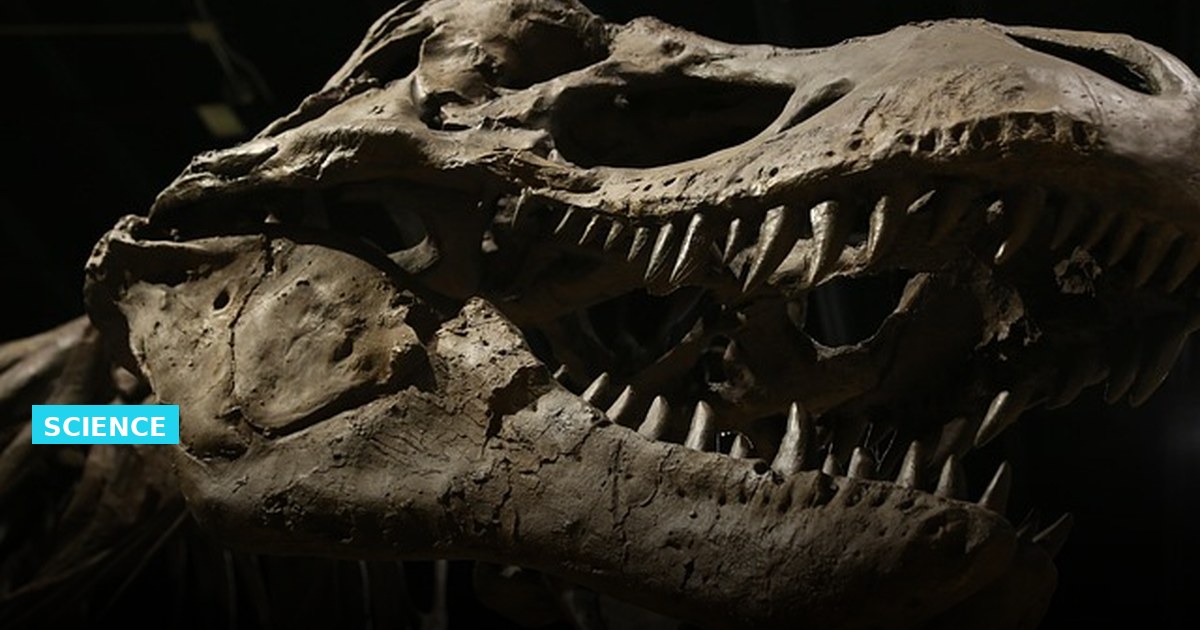
A Tyrannosaurus rex fossil is preserved through careful excavation, preparation, and stabilization by paleontologists, then displayed using metal armatures to support the bones in a lifelike pose. The process involves removing surrounding rock, applying consolidants to strengthen fragile bone, and mounting the skeleton in a museum exhibit with climate control and protective barriers.
Key Facts
- A juvenile T. rex fossil nicknamed "Gus" was discovered by a hiking family in North Dakota's Badlands in 2022 and is now displayed at the Denver Museum of Nature & Science before being auctioned at Sotheby's in July 2026, with a valuation of $30 million.
- A separate T. rex fossil found on a South Dakota ranch could sell for $30 million at auction, while another T. rex fossil previously sold for a record $50.1 million.
- In November 2025, the North Dakota Geological Survey discovered a new T. rex skeleton at a dig site in southwest North Dakota, significant for ongoing research.
- Recent research published in November 2025 in Nature confirmed that the dinosaur previously considered a juvenile T. rex—Nanotyrannus—is actually its own distinct species, not a young T. rex, based on differences including fewer tail vertebrae, more teeth, larger hands, and different skull nerve and sinus patterns.
- In January 2024, a new Tyrannosaurus species, Tyrannosaurus mcraensis, was identified from a jawbone found at Elephant Butte Lake in New Mexico in the 1980s, which lived about 5 million years before T. rex.
- Another discovery in 2025, nicknamed "Dragon Prince," further reshaped the T. rex family tree.
- The American Museum of Natural History in New York displays a T. rex fossil mount in its Hall of Saurischian Dinosaurs as a permanent exhibit.
From Field to Lab The Preservation Journey of a T. rex Fossil
Discovery in the Badlands The Gus Story
On a family hike in the North Dakota Badlands in 2022, three children—Liam Fisher, Kaiden Madsen, and Jessin Fisher—along with paleontologist Dr. Tyler Lyson, made a remarkable find: the fossilized remains of a juvenile Tyrannosaurus rex.
This discovery captured global attention not only because of its rarity but also because of the human story behind it. The fossil, nicknamed "Gus," represents one of the few juvenile T.rex specimens ever found, offering scientists a window into the early life stages of this iconic predator. The specimen was later airlifted by a Black Hawk helicopter, as shown in a 2023 photo of Dr.Lyson and the finders sitting atop a helicopter net in the Badlands, underscoring the logistical challenges of extracting such a large fossil from remote terrain. Preservation begins the moment a fossil is spotted.For Gus, the initial steps involved careful documentation of the site, including photographs, GPS coordinates, and mapping of the bone positions. Paleontologists then excavated the surrounding rock—typically sandstone or mudstone—using tools ranging from rock hammers and chisels to finer picks and brushes.Each bone fragment was wrapped in plaster-soaked burlap to create a protective field jacket, which prevents breakage during transport. The helicopter airlift was a necessity because the Badlands' rugged landscape made ground vehicle access nearly impossible.Preparation and Stabilization Techniques
Once a T. rex fossil reaches the lab, the real work begins.
Preparation involves removing the rock matrix from the bone, a painstaking process that can take months or even years for a large specimen. Technicians use air scribes—small pneumatic tools that vibrate to chip away rock—and dental picks for fine detail.For Gus, as a juvenile, the bones are smaller and more fragile than adult T. rex specimens, requiring even greater care.Consolidants are applied to stabilize fragile bone. These are typically dilute solutions of acrylic resins or other adhesives that penetrate the porous bone and harden, preventing crumbling.For example, a common consolidant is Paraloid B-72, a thermoplastic resin that is reversible (can be removed with acetone) to allow future conservation. The goal is to make the fossil strong enough to handle and mount, without altering its scientific integrity.Fossils are also cleaned of any remaining dirt or debris using water baths or gentle air abrasion with fine powders like baking soda. Each bone is cataloged, photographed, and studied for scientific data, such as growth lines that indicate age, pathologies (signs of injury or disease), and bite marks.For Gus, the juvenile status provides clues about how T. rex grew—whether it had a rapid growth spurt or more gradual development.Scientific Analysis What Gus Reveals
The preservation of Gus allows for detailed scientific analysis. Juvenile T.
rex fossils are rare because young dinosaurs had smaller, more delicate bones that were less likely to survive fossilization. By studying Gus, paleontologists can compare its bone structure to adult T.rex specimens, helping to settle debates about growth rates and whether certain features, like the long arms seen in young T. rex, were retained into adulthood.Interestingly, recent research published in Nature in November 2025 has reshaped the understanding of juvenile T. rex.For decades, a dinosaur named Nanotyrannus was thought to be a juvenile or "teenaged" T. rex.However, new analysis revealed that Nanotyrannus had distinct features—fewer tail vertebrae, more teeth, larger hands, and different skull nerve and sinus patterns—confirming it as its own species, not a young T. rex.This finding means that true juvenile T. rex fossils like Gus are even more valuable for understanding T.rex growth. Gus also contributes to the broader T.rex family tree. In January 2024, a new species, Tyrannosaurus mcraensis, was identified from a jawbone found in New Mexico in the 1980s.This species lived about 5 million years before T. rex, indicating that the lineage was already diverse before the famous predator appeared.Another discovery in 2025, the "Dragon Prince" dinosaur in Mongolia, further rewrote the T. rex family tree, showing that these large theropods had a complex evolutionary history across continents.Displaying a Tyrannosaurus Rex From Museum Mount to Auction Block
The Art of Mounting a Fossil Skeleton
Displaying a T. rex fossil requires transforming a collection of fragile, often incomplete bones into a dynamic, scientifically accurate exhibit.
The process begins with creating a metal armature—a custom-built internal support frame that holds the bones in their correct anatomical positions. For Gus, which is now on display at the Denver Museum of Nature & Science, the armature was designed to accommodate the smaller size of a juvenile skeleton while still conveying the power of a T.rex. The armature is typically made of steel or aluminum, with adjustable clamps and brackets that cradle each bone without damaging it.Bones are attached using padded supports or acrylic pins drilled into the marrow cavity. The skeleton is posed in a lifelike stance, often with the head angled downward as if scanning for prey, the tail held straight for balance, and the legs in a walking posture.For Gus, the pose likely emphasizes its juvenile proportions—longer legs relative to its body compared to adults, and a more gracile skull. One challenge is that fossils are often incomplete.Missing bones are sometimes reconstructed using plaster or resin casts based on other specimens or 3D-printed models. For example, the American Museum of Natural History's T.rex mount in the Hall of Saurischian Dinosaurs uses a combination of real and cast bones to create a complete skeleton. However, museums typically label which bones are original and which are replicas to maintain scientific transparency.Climate Control and Protective Measures
Once mounted, the fossil must be protected from environmental damage. Museums control temperature and humidity to prevent the bones from cracking or absorbing moisture, which can cause deterioration.
For Gus's display at the Denver Museum, the exhibit likely includes climate-controlled glass cases or barriers to keep visitors at a safe distance while allowing clear viewing. UV-filtered lighting prevents fading or chemical changes in the bone.Security is also a concern, especially for valuable specimens. Gus is valued at $30 million and is set to be auctioned at Sotheby's in July 2026, making it one of the most expensive dinosaur fossils ever.Museums often install motion sensors, alarms, and reinforced displays for high-value fossils. During the display period before auction, Gus would have been under constant surveillance to prevent theft or vandalism.The Auction Market for T. rex Fossils
Not all T. rex fossils stay in museums.
Gus is the latest in a series of high-profile dinosaur auctions. In 2020, a T.rex skeleton named "Stan" sold for $31.8 million, and in 2024, another T. rex fossil sold for a record $50.1 million.Gus's $30 million valuation positions it as a potentially record-setting sale, though the final price may exceed expectations due to its juvenile rarity and the story of its discovery by children. The auction of scientifically important fossils has drawn criticism from paleontologists, who argue that private buyers can remove specimens from public view and scientific study.For Gus, the Denver Museum's temporary display offered public access before the sale, but its permanent fate depends on the buyer. Some collectors donate or loan their fossils to museums, while others keep them in private collections.The auction process itself requires the fossil to be preserved and documented thoroughly, often with professional photographs and scientific descriptions, to attract bidders.The North Dakota Geological Survey's 2025 Discovery
In November 2025, the North Dakota Geological Survey announced the discovery of a new T. rex skeleton at a dig site in southwest North Dakota.
This find, separate from Gus, was described as "significant for research" and adds to the growing body of T. rex fossils from the region.The preservation and display of this specimen will follow similar protocols: excavation, preparation, analysis, and eventual mounting for public viewing, likely at a museum or research institution. This discovery underscores the ongoing importance of the Badlands and surrounding areas for T.rex research. The region's Late Cretaceous rock formations have yielded numerous specimens, including the famous "Sue" at the Field Museum in Chicago.Each new find helps refine our understanding of T. rex biology, behavior, and evolution.For example, the 2025 find may provide additional data on growth rates or geographic variation within the species.The Scientific Significance of T. rex Preservation
Understanding Growth and Development
Preserved T. rex fossils, especially juveniles like Gus, are critical for studying how these animals grew.
Scientists can analyze bone microstructure using thin sections cut from the fossil and viewed under a microscope. Growth rings, similar to tree rings, indicate age and growth rate.For T. rex, studies have shown that it underwent a rapid growth spurt during its teenage years, gaining up to 5 pounds per day.Juvenile specimens like Gus allow researchers to compare growth rates at different life stages and determine if the pattern was consistent across individuals. The recent confirmation that Nanotyrannus is a separate species, not a juvenile T.rex, has made true juvenile T. rex fossils even more valuable.Prior to this research, many small tyrannosaur bones were classified as Nanotyrannus, potentially skewing growth studies. Now, with clear diagnostic features distinguishing the two, scientists can more accurately track T.rex development from hatchling to adult.Evolutionary Insights from Fossil Preservation
Preserved T. rex fossils also inform evolutionary relationships.
The discovery of Tyrannosaurus mcraensis in New Mexico, announced in January 2024, shows that the genus Tyrannosaurus existed at least 5 million years earlier than previously thought. This species, identified from a jawbone, exhibits subtle differences in tooth shape and bone structure compared to T.rex, suggesting a gradual evolution across North America. Similarly, the "Dragon Prince" discovery in Mongolia in 2025 reshaped the T.rex family tree by revealing a new lineage of large tyrannosaurs in Asia. This find indicates that the group that includes T.rex was more geographically widespread than once believed, with migrations between continents occurring during the Cretaceous period. Preserved fossils from these regions provide the direct evidence needed to test these hypotheses.Pathologies and Behavior
Fossil preservation also captures evidence of injuries, diseases, and behavior. Many T.
rex bones show healed fractures, bite marks from other T. rex (indicating aggressive encounters), and signs of infection.For example, some specimens have fused vertebrae from healed injuries or tooth marks on skulls from combat. Juvenile T.rex fossils like Gus can show whether young dinosaurs experienced different injury patterns than adults, perhaps from learning to hunt or avoiding predators. Coprolites (fossilized feces) and stomach contents associated with T.rex fossils provide direct evidence of diet. Although no such evidence is mentioned for Gus, other T.rex specimens have preserved gut contents showing they ate other dinosaurs. These traces are incredibly rare and require exceptional preservation conditions, such as rapid burial in fine sediment.The Future of T. rex Display and Research
Technological Advances in Preservation
New technologies are improving how T. rex fossils are preserved and displayed.
CT scanning allows paleontologists to examine internal bone structures without damaging the fossil. 3D scanning and printing create exact replicas for research and display, reducing wear on original bones.For Gus, these techniques could have been used to create a high-resolution digital model for scientists worldwide to study, even after the fossil is sold to a private owner. Virtual reality and augmented reality exhibits are also emerging.Some museums offer digital experiences where visitors can "walk alongside" a T. rex skeleton or see how the muscles and skin would have looked.These tools enhance public engagement while protecting the fragile original fossil.Ethical Considerations in Fossil Sales
The auction of Gus in July 2026 raises ethical questions about the commercialization of scientific specimens. Paleontologists argue that fossils are part of humanity's natural heritage and should remain in public institutions for research and education.
However, private landowners and discoverers often have legal ownership of fossils found on their property, and auctions can provide significant financial incentives for discovery. Some solutions include public-private partnerships where museums raise funds to purchase auctioned fossils, or laws requiring fossils to be offered to museums first.For Gus, the Denver Museum's temporary display allowed public access, but its long-term fate is uncertain. The record $50.1 million sale of another T.rex in 2024 shows that the market for these fossils is strong, potentially pricing museums out of acquisitions.Ongoing Research Directions
The discovery of new T. rex fossils, such as the 2025 North Dakota Geological Survey find, ensures that research will continue.
Key questions include: How did T. rex evolve from smaller ancestors?What caused its extinction at the end of the Cretaceous? Did T.rex live in social groups or as solitary hunters? Comparative studies of juvenile and adult T.rex fossils, like Gus, can address whether young dinosaurs had different ecological roles—for example, hunting smaller prey while adults took down larger dinosaurs. The resolution of the Nanotyrannus debate now provides clearer data for these studies.Additionally, the identification of T. mcraensis opens the door to searching for even older tyrannosaur fossils in the southwestern United States.Frequently Asked Questions
How long does it take to preserve and mount a T. rex fossil?
The timeline varies by specimen. Field excavation can take weeks to months, depending on the size and condition of the fossil.
Laboratory preparation, including cleaning and stabilization, often takes one to three years for a complete skeleton. Mounting the fossil for display adds another six months to a year.For Gus, the process from discovery in 2022 to display at the Denver Museum likely took about two to three years.What happens to a T. rex fossil after it is auctioned?
After auction, the buyer takes ownership of the fossil. Some buyers donate or loan the fossil to museums for public display and scientific study, while others keep it in private collections.
The fossil's scientific value is lost if it is not available for research. In some cases, museums or foundations purchase the fossil to ensure it remains in the public trust.Can juvenile T. rex fossils be identified by their smaller size?
Not solely by size, because Nanotyrannus was also small but is now recognized as a separate species. True juvenile T.
rex can be identified by bone microstructure (growth rings), the absence of Nanotyrannus features (such as more teeth and larger hands), and association with adult T. rex fossils.Gus was confirmed as a juvenile T. rex through detailed anatomical and histological analysis.Why are T. rex fossils often found in North Dakota and South Dakota?
These states contain rock formations from the Late Cretaceous period, about 66 to 68 million years ago, when much of the region was a coastal plain along the Western Interior Seaway. The sedimentary rocks in the Badlands and nearby areas preserve many dinosaur fossils due to rapid burial by river sediments.
The harsh, erosion-prone landscape also exposes fossils that were previously buried.How do museums protect T. rex fossils from damage during display?
Museums use climate control to maintain stable temperature and humidity, UV-filtered lighting to prevent fading, and barriers or glass cases to keep visitors at a safe distance. The metal armature supporting the skeleton is designed to distribute weight evenly and avoid stress on individual bones.
Regular inspections and conservation treatments ensure long-term preservation.Reference Notes
Information in this article is based on publicly available sources. Some details may change over time.
Verify with official sources before acting.