Evanna Howell’s NASCAR Suspension, What It Means for the 2025 Season
What Actually Happened at Charlotte? The Golf Cart Incident That Ended a Career
The 2025 NASCAR season already had its share of drama on the track, but the story that broke on May 23, 2026 has overshadowed everything. Evanna Howell, a senior account manager for 23XI Racing, was arrested and charged with assault with a deadly weapon inflicting serious injury following an incident at Charlotte Motor Speedway.
Two days later, NASCAR announced her indefinite suspension for violating Behavioral Sections 4.4 A of the rulebook. The details are ugly, and they matter for every team in the garage.According to court records from Cabarrus County, the charge stems from Howell allegedly hitting someone with a golf cart. This isn't a parking lot fender-bender—assault with a deadly weapon inflicting serious injury is a felony in North Carolina.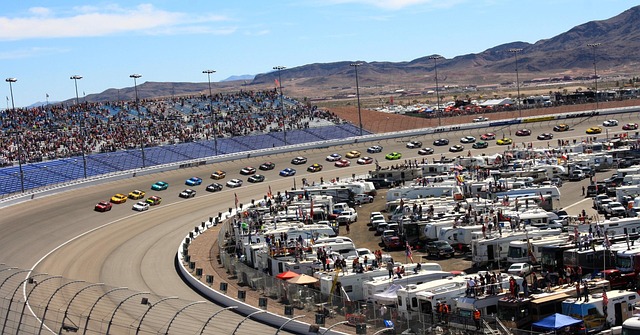
| Penalty Detail | Specifics |
|---|---|
| Individual | Evanna Howell, 23XI Racing Senior Account Manager |
| Rule Violation | Behavioral Sections 4.4 A |
| Suspension Type | Indefinite |
| Date Announced | May 27, 2026 |
| Criminal Charge | Assault with a deadly weapon inflicting serious injury |
| Location | Charlotte Motor Speedway |
Here is where the story gets complicated for the rest of the paddock. Howell's role as senior account manager had nothing to do with pit crew safety or on-track operations.
She was on the sponsorship side, the person responsible for managing relationships with brands that pour millions into the sport. Yet NASCAR's behavioral rule is written so broadly that it covers any "action detrimental to Stock Car racing or NASCAR." A golf cart assault in the infield qualifies, regardless of job title.Rulebook Section 4.4 A The Nuclear Option NASCAR Uses Sparingly
NASCAR's rulebook is not a light read. It is dense, technical, and filled with language that leaves room for interpretation.
Section 4.4 A, the behavioral clause that brought down Evanna Howell, is the nuclear option in that document. It reads: "Actions by a NASCAR member that NASCAR finds to be detrimental to Stock Car racing or NASCAR." That is it.No specific list of prohibited behaviors. No graduated scale of penalties.Just a blank check for the sanctioning body to remove anyone it deems a liability. This vagueness is intentional, and it is also controversial.Critics argue that it gives NASCAR too much power to act without due process. Supporters counter that the sport's reputation depends on swift action when members cross lines.In Howell's case, the criminal charge made the decision easy for NASCAR. But what about situations where no arrest occurs?The rule still applies, and that creates uncertainty for every team member.| Behavioral Section 4.4 A Key Aspects | Implications |
|---|---|
| No specific list of prohibited acts | Gives NASCAR broad discretion |
| No fixed penalty range | Can fine, suspend, or revoke membership |
| No appeal process outlined in public rulebook | Decision is effectively final |
| Applies to all credentialed personnel | From drivers to hospitality staff |
| Does not require criminal conviction | Conduct alone can trigger penalty |
The practical reality is that Section 4.4 A is used most often for conduct that brings negative media attention. NASCAR cannot afford to have its brand associated with felony assault charges, so the suspension was inevitable.
But the rule's breadth means that a team accountant caught in a bar fight, a PR representative posting offensive content, or a sponsor relations person involved in a road rage incident could all face the same fate. What makes this case particularly instructive is that Howell had given an interview before the incident where she praised NASCAR's sponsorship culture compared to other sports."I think what I love the most about NASCAR and working for a NASCAR team is that sponsorship is so different when you think about the NBA and the NFL," she said at the time. That quote now reads like tragic irony.She was the face of how 23XI Racing built relationships with brands, and within days, she was the face of how quickly those relationships can be destroyed. For fans and industry insiders trying to understand the stakes, the takeaway is clear: NASCAR does not distinguish between on-track and off-duty behavior when it comes to reputation management.If you wear the credential, you are always under scrutiny. The rulebook's vagueness is a feature, not a bug.It allows NASCAR to protect its brand without getting bogged down in legal definitions of what constitutes "detrimental" conduct. The question that remains unanswered is whether 23XI Racing knew about any prior incidents involving Howell.If they did and failed to act, that raises questions about organizational oversight. If they did not, the team may need to revise its internal monitoring of employee conduct.Either way, the suspension of a senior account manager has ripple effects that extend far beyond one individual's career.How 23XI Racing's Reputation Takes a Hit in the Sponsorship World
23XI Racing has positioned itself as a progressive, modern team in a sport that has often been slow to change. Co-owned by Michael Jordan and Denny Hamlin, the team attracted major sponsors like Nike, McDonald's, and MoneyLion by promising diversity, innovation, and professionalism.
The indefinite suspension of a senior account manager on felony assault charges threatens to undermine that carefully built image. Sponsorship in NASCAR is relationship-driven.Brands do not just write checks; they embed their marketing teams with race teams, attend events together, and trust that the team's personnel will represent the brand professionally. A senior account manager is the person who manages those relationships daily.When that person is arrested for hitting someone with a golf cart, every sponsor whose account she handled has to ask hard questions about the team's culture and oversight.| Sponsorship Risk Factor | Impact on 23XI Racing |
|---|---|
| Existing sponsor trust | Calls from brand marketing directors wanting explanations |
| Future sponsor acquisition | Increased due diligence on team employee screening |
| Contract renewal negotiations | Leverage shifts toward sponsors who can demand concessions |
| Industry reputation | Competitors will use this in sponsor pitch meetings |
| Michael Jordan's personal brand | Any association with criminal conduct reflects poorly |
The timing could not be worse. The 2025 season has been competitive for 23XI Racing, with both Tyler Reddick and Bubba Wallace showing speed.
But off-track drama has a way of overshadowing on-track results. When a sponsor's board of directors sees headlines about a team employee facing felony charges, the natural reaction is to ask whether the team has proper controls in place.The answer, in this case, appears to be no. Consider the practical implications.A senior account manager typically handles confidential sponsor data, access to team facilities, and coordination of hospitality events. Howell's role meant she had direct contact with brand representatives, many of whom are now questioning whether they were exposed to risk while working with her.The golf cart incident happened at Charlotte Motor Speedway, a venue where sponsors host clients and executives. The optics are terrible: a team employee allegedly using a vehicle as a weapon in the very environment where brands are supposed to feel safe and welcome.23XI Racing has not released a public statement about Howell's arrest beyond acknowledging the suspension. That silence speaks volumes.In the sponsorship world, where transparency is valued, a lack of communication can be interpreted as either confusion or cover-up. Neither is good.For fans who want to support the team through this period, wearing team apparel is one way to show loyalty. The NASCAR Team Apparel - Driver T-Shirt featuring 23XI drivers is a popular choice that keeps the focus on the racing rather than the off-track mess.But the bigger picture is that the team needs to demonstrate it has learned from this incident. That means implementing employee conduct training, revising background check procedures, and communicating those changes to sponsors.The suspension itself is a necessary first step, but it is not sufficient. 23XI Racing must show that it holds its employees to the same standard it demands from its drivers.If Howell's behavior was known or should have been known by management, the team has a culture problem that runs deeper than one bad hire. If it was a complete surprise, the team has a blind spot in its hiring and monitoring processes.Either way, the sponsorship community is watching. And in NASCAR, where sponsorship dollars determine which teams survive, this is not a distraction—it is a threat to the team's financial future.What This Means for Every NASCAR Team Employee Your Conduct Is Never Off-Duty
The Evanna Howell suspension sends a chilling message to every person who holds a NASCAR credential: your behavior away from the track can end your career in this sport. This is not a new rule, but the high-profile nature of this case makes it impossible to ignore.
Whether you are a crew chief, a hospitality coordinator, or a sponsorship sales director, Section 4.4 A applies equally. The key takeaway is that NASCAR's behavioral standards are not limited to race day activities.The incident at Charlotte Motor Speedway occurred during a race weekend, but the golf cart assault charge stemmed from conduct that could have happened anywhere on the property. The rule does not distinguish between actions taken in the garage area, the fan zone, or the parking lot.If you are credentialed and you do something that damages the sport's image, you are vulnerable.| Employee Type | Risk Level Under Section 4.4 A | Recommended Safeguards |
|---|---|---|
| Pit crew members | High (visible in high-pressure situations) | Conflict resolution training, anger management resources |
| Account managers | Moderate (client-facing but less public) | Clear code of conduct for off-site events |
| Hospitality staff | Moderate (interact with sponsors and guests) | Training on professional behavior at all times |
| Drivers and spotters | Very high (public face of the sport) | Media training, behavioral contracts with explicit terms |
| Administrative personnel | Lower but not zero | Awareness of rulebook expectations |
The practical guidance here is straightforward. Every team employee should understand that their credential is a privilege, not a right.
NASCAR can revoke it for conduct that has nothing to do with racing if the sanctioning body deems it detrimental. The standard is subjective, which makes it dangerous for anyone who thinks they can separate their professional and personal lives.One way to stay informed about these types of issues is to read the NASCAR 2025 Season Guide Book, which includes analysis of rule changes and behavioral standards. Understanding the rules before you break them is basic self-preservation in this sport.The case also raises questions about what happens to employees who witness problematic behavior. Does a team member have a duty to report a colleague who seems unstable or aggressive?The rulebook does not explicitly require whistleblowing, but silence can be interpreted as complicity if a serious incident occurs. Teams should establish clear reporting channels so that employees can raise concerns without fear of retaliation.For Howell herself, the consequences extend beyond NASCAR. A felony assault charge makes it difficult to find employment in any professional setting, not just motorsports.Background checks will flag the arrest, and even if the case is resolved favorably, the public record remains. The "indefinite" nature of NASCAR's suspension means there is no clear path to reinstatement.She is effectively banned from the sport for life unless the sanctioning body chooses to revisit the decision, which is unlikely given the severity of the charge. The broader lesson for the industry is that NASCAR is serious about protecting its brand.The sanctioning body has shown it will act decisively even against employees who are not directly involved in racing. Every team should review its internal policies and ensure that all staff members understand the stakes.A golf cart may seem like a harmless vehicle, but in the wrong hands, it becomes a weapon—and a career-ender.The Criminal Side Assault Charges and What Happens Next in Court
While NASCAR's suspension is immediate and indefinite, the criminal case against Evanna Howell is just beginning. She was charged on May 23, 2026 with assault with a deadly weapon inflicting serious injury, a felony in North Carolina.
The case will proceed through the Cabarrus County court system, and the outcome could take months or even years to resolve. Understanding the legal landscape helps put NASCAR's actions in context.North Carolina law defines assault with a deadly weapon inflicting serious injury as a Class E felony, punishable by up to 63 months in prison. The "deadly weapon" in this case is the golf cart.Prosecutors will need to prove that Howell intentionally used the golf cart to cause harm and that the resulting injury was serious. The definition of "serious injury" is broad and includes anything from broken bones to permanent disfigurement or impairment.| Criminal Case Element | Status as of May 28, 2026 |
|---|---|
| Date of charge | May 23, 2026 |
| Jurisdiction | Cabarrus County, North Carolina |
| Charge | Assault with a deadly weapon inflicting serious injury (Class E felony) |
| Maximum sentence | Up to 63 months in prison |
| Bond status | Not publicly disclosed |
| Next court date | Not yet scheduled |
The existence of a serious injury is the key difference between this charge and a lesser assault charge. If the victim suffered only minor injuries, the charge might have been simple assault or assault with a deadly weapon without the "inflicting serious injury" modifier.
The fact that prosecutors chose the higher charge suggests the injuries were significant—possibly broken bones, head trauma, or other lasting damage. Howell's legal strategy will depend on the facts of the case.If the incident was truly accidental—if the golf cart malfunctioned or if Howell lost control without intent—the defense might argue that the charge is overblown. However, the "deadly weapon" element is relatively easy for prosecutors to establish because golf carts are capable of causing serious harm when used improperly.The harder question is whether Howell acted intentionally. NASCAR's suspension does not depend on the outcome of the criminal case.The rulebook allows the sanctioning body to act based on its own findings, which are not subject to the same evidentiary standards as a criminal trial. This means Howell could be permanently banned from NASCAR even if she is acquitted in court.Conversely, if she is convicted, NASCAR could make the suspension permanent without further review. For the victim, the criminal case provides a path to justice that goes beyond NASCAR's internal discipline.A conviction carries real consequences—prison time, fines, and a permanent criminal record. The victim may also pursue a civil lawsuit for damages, though the details of any potential settlement are not public.The practical takeaway for NASCAR employees is that a single moment of poor judgment can trigger both professional and legal consequences that compound each other. The suspension ends your career in the sport.The criminal charge ends your freedom. There is no scenario where this ends well for Howell, regardless of how the legal process unfolds.For fans following the story, the NASCAR Official Race Scanner Headset is a good investment for listening to team communications during races—though it will not help you hear the court proceedings. The legal case will be covered in local news outlets and motorsports media, but the details will remain sealed until hearings begin.The criminal case also puts pressure on 23XI Racing to respond. If the victim was a team employee or a contractor, the team may face additional legal exposure.If the victim was a fan or a member of another team, the cross-team dynamics become even more complicated. Either way, the legal process will keep this story in the headlines for the foreseeable future, and that is the last thing 23XI Racing needs during a competitive season.Affiliate Disclosure: This article contains affiliate links. If you purchase through these links, we may earn a small commission at no extra cost to you. We only recommend products we believe in.