Artificial Intelligence News, 3 Breakthroughs That Just Reshaped the Market

The Three Shots That Changed the AI Market in 2026
If you blinked this quarter, you missed the three most consequential AI moves of the year. Let's be honest: the noise-to-signal ratio in AI news is brutal right now.
Every week brings a new model, a new funding round, a new "breakthrough" that turns out to be a press release in disguise. But May 2026 has been different.Three specific developments have reshaped what's possible, what's profitable, and what's dangerous. And they demand your attention.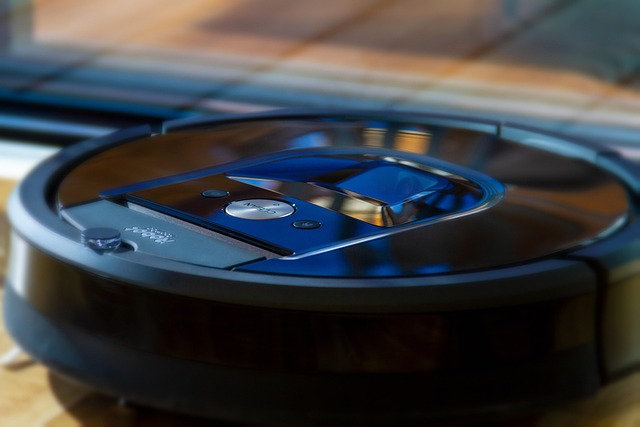
Google's AI Mode Search Is No Longer a Search Engine
Google's announcement of AI Mode for its search engine, powered by the Gemini model, is the most consequential product launch of 2026 so far. This isn't "AI features on top of search." This is search rebuilt from the ground up as an AI-native experience.
The implications are staggering. Consider what AI Mode does differently.Traditional search returns links — you click, you read, you synthesize. AI Mode returns answers.It generates conversational responses, cites sources, and handles follow-ups naturally. Google DeepMind also announced Veo 3, a state-of-the-art video generation model, meaning Google is now competing directly with OpenAI's Sora and Meta's video tools.The integration of these capabilities into a single search experience means Google is no longer just an index of the web — it's an AI platform.| Feature | Traditional Google Search | Google AI Mode |
|---|---|---|
| Query type | Keyword-based | Conversational |
| Output format | Links + snippets | Generated text + citations |
| Context retention | None | Multi-turn conversation |
| Video generation | Separate tools | Veo 3 integration |
| Model backend | Legacy ranking | Gemini LLM |
What does this mean for you? If you rely on organic search traffic, your days are numbered.
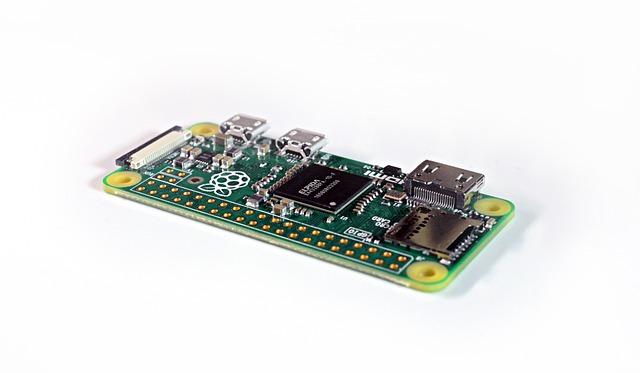
Users will get answers without clicking through. If you build products that depend on search results — think SEO tools, content aggregators, or affiliate sites — you need a new model.The only winners here are companies that own proprietary data or create experiences that AI Mode can't replicate: hands-on products, community-driven platforms, and deeply integrated services. And here's the kicker: Google's Play Store is also pushing AI-powered tools.An "Artificial Intelligence Starter Kit with Raspberry Pi 5" is now a top-seller for developers wanting to build custom voice assistants or local AI pipelines. If you're not experimenting with local AI inference, you're missing the point.The cloud is not the only game anymore.The Dark Side of AI at Scale Child Safety in Crisis
Let's talk about the number that should keep every executive awake at night. According to the National Center for Missing and Exploited Children (NCMEC), reports of AI-generated content rose from thousands in 2023 to over a million in 2025.
That's not a typo. And the trend is accelerating into 2026.This isn't just a moral crisis — it's a regulatory and operational one. Governments are watching.The U.S., Australia, Canada, New Zealand, and the UK have already issued joint agentic AI security guidance. The Nebraska Supreme Court suspended an attorney over AI misuse.The Air Force debuted an operational AI wargame system. The message is clear: regulators are moving from "let's study this" to "let's enforce this."| Year | AI-Generated Child Safety Reports to NCMEC | Year-over-Year Increase |
|---|---|---|
| 2023 | Thousands (exact figure undisclosed) | Baseline |
| 2024 | Estimated hundreds of thousands | ~10x |
| 2025 | Over 1 million | ~3-5x |
| 2026 (projected) | 2-3 million (based on current trends) | ~2-3x |
What's your responsibility here? If you run a platform that hosts user-generated content, if you deploy generative AI APIs, or if you build tools that can produce images or videos — you need guardrails.
Not next quarter. Now.The companies that ignore this will face fines, lawsuits, and reputational damage that no AI can fix. But there's a practical upside: the companies that build robust safety systems will win trust.If you're a developer, consider building on hardware that keeps processing local and private. A "Deep Learning Computer with NVIDIA RTX 4060 GPU" can run inference for moderation models without sending data to the cloud.That's not just a privacy win — it's a regulatory compliance win. The takeaway: don't treat safety as a PR problem.Treat it as a product feature. The market is already rewarding companies that do.Agentic AI Goes Mainstream NVIDIA, Microsoft, and the Race for Autonomy
The third breakthrough is the most transformative for enterprise. NVIDIA's Agent Toolkit, announced at GTC, is an open-source platform for building autonomous enterprise AI agents.
It includes NVIDIA OpenShell, a runtime that enforces policy-based security and privacy guardrails. This isn't a toy.This is a production-ready framework for AI that acts, not just thinks. Let's look at the scale.Two dozen leading AI companies — Microsoft, Nvidia, Google, and others — joined the U.S. "Genesis Mission" to coordinate AI and robotics research.Microsoft invested $10 billion in Japan for AI and cyber defense expansion. Meta laid off 8,000 employees in its latest AI push.Amazon launched an AI health agent through One Medical. The pattern is unmistakable: every major tech company is betting that autonomous agents will be the next operating system of business.| Company | Agentic AI Move | Investment/Scale |
|---|---|---|
| NVIDIA | Agent Toolkit + OpenShell | Open-source platform |
| Microsoft | $10B Japan investment | AI + cyber defense |
| Meta | 8,000 layoffs + AI model debut | Restructuring for AI |
| AI Mode + Veo 3 | Full search integration | |
| Amazon | AI health agent (One Medical) | Consumer healthcare |
What does an autonomous AI agent actually do? In practice, it can handle customer service, data analysis, code generation, and even physical tasks when paired with robotics.
Advancements in humanoid robot dexterity this year mean AI-enabled robots could soon clean homes, work in warehouses, or provide care in healthcare settings. The Genesis Mission aims to coordinate federal research to accelerate this.For business leaders, the question isn't "should I use agentic AI?" — it's "how fast can I retrain my workforce?" The companies that treat agents as tools, not replacements, will outperform. Invest in training, build internal AI task forces, and start small.A good starting point? An "AI Smart Robot Vacuum Cleaner with Lidar Navigation" might seem trivial, but it's a perfect example of physical AI making decisions autonomously.The same logic applies to enterprise workflows.The AI Chip Price War Who Wins and Who Pays
Underneath every AI breakthrough is a chip. And right now, the chip market is in turmoil.
NVIDIA's memory costs have soared 485%, with latest AI systems now costing $7-8 million to build. Memory now comprises 25% of total cost.Each Rubin GPU costs a mere $50,000 apiece — and that's before you add the rack, cooling, and networking. Meanwhile, Meta announced 4 new AI chips, raising competitive stakes with NVIDIA and AMD.Yann LeCun's new AI startup raised $1 billion in seed funding. The race is accelerating, but the cost is becoming prohibitive for all but the largest players.| Component | Cost Impact | Trend |
|---|---|---|
| NVIDIA Rubin GPU | $50,000 each | Stable high |
| Memory (HBM) | 485% cost increase | Rising |
| Total AI system | $7-8 million | Rising |
| Meta custom AI chips | Undisclosed | New entrant |
What does this mean for you? If you're a startup, you cannot compete on raw compute.
Don't try. Instead, focus on efficiency: use smaller models, quantize your networks, and run inference on consumer-grade hardware.A "Deep Learning Computer with NVIDIA RTX 4060 GPU" can handle many production workloads if you optimize your model properly. The era of "throw more GPUs at the problem" is ending.For enterprise buyers, the calculus has changed. Cloud AI pricing is going up as chip costs rise.The smart move is to diversify: use cloud for training, but move inference on-premise. Build hybrid architectures.Lock in long-term contracts with cloud providers before prices spike again. The winners of this chip war won't be the companies with the most GPUs.They'll be the ones that get the most work per watt. Start optimizing today.Your Next Move Build a Practical AI Roadmap for 2026
You've seen the trends. Now what?
The market has shifted from "explore AI" to "deploy AI or fall behind." But deployment without strategy is just expensive noise. Here's your actionable roadmap for the rest of 2026.Step 1: Audit your data and infrastructure. Can you run AI locally? An "Artificial Intelligence Starter Kit with Raspberry Pi 5" costs under $100 and lets you experiment with edge inference.Start there. Then scale to a "Deep Learning Computer with NVIDIA RTX 4060 GPU" for heavier workloads.Don't jump straight to cloud — you'll waste money. Step 2: Implement safety guardrails now. The regulatory environment is tightening.The joint security guidance from the U.S., Australia, Canada, NZ, and UK is a warning shot. If you handle user data or generate content, invest in moderation AI.Open-source models running on local hardware are your cheapest compliance path. Step 3: Experiment with agentic AI. Start with a simple customer service bot using NVIDIA's Agent Toolkit.Let it handle routine queries. Measure the savings.Then expand to data analysis, code review, or warehouse management. The companies that learn agent workflows now will have a 2-year head start by 2028.Step 4: Diversify your chip strategy. Don't bet everything on one cloud provider. Benchmark your workloads on consumer GPUs, cloud instances, and edge devices.The cost differences are staggering — a "Deep Learning Computer with NVIDIA RTX 4060 GPU" can handle inference for a fraction of cloud GPU costs. Step 5: Train your people. The biggest bottleneck in AI adoption isn't technology — it's talent.Meta laid off 8,000 people while investing in AI. That's the pattern: retrain or replace.Invest in internal AI education, hire prompt engineers, and build a culture of experimentation. The window for early mover advantage is closing.By Q4 2026, every competitor will have an AI strategy. The difference will be execution.Start with one project, one team, one tool. Deliver results.Then scale. The future isn't coming — it's already here, running on GPUs, trained on your data, and ready to work.The only question is whether you'll build it or be built by it.Affiliate Disclosure: This article contains affiliate links. If you purchase through these links, we may earn a small commission at no extra cost to you. We only recommend products we believe in.