Alaska Air vs. Competitors, Which Airline Wins for West Coast Travel in 2025?

Quick Answer
For West Coast travel in 2025, Alaska Airlines wins by a meaningful margin over its main competitors—Southwest, Delta, and United—thanks to its completed merger with Hawaiian Airlines, expanded global reach, and strong financial performance. The airline has transformed from a regional player into a serious transpacific contender, while maintaining its reputation for solid service.
• Best for: Frequent West Coast flyers who value route density, premium cabin upgrades, and now desire access to Asia and future European destinations, all under one loyalty program. • Key point: Alaska Airlines achieved a single operating certificate with Hawaiian Airlines in 2025, creating a unified network that serves the entire Pacific Rim.• Bottom line: If you live on the West Coast and fly more than a few times a year, Alaska Air Group is your best bet—it offers more relevant routes, better financial stability, and a forward-looking strategy than any other carrier in the region.The Merger That Changed Everything Alaska + Hawaiian in 2025
The biggest story in West Coast aviation this year isn't a new route or a fare sale—it's the full operational integration of Alaska Airlines and Hawaiian Airlines. According to official announcements, the two airlines achieved a single operating certificate in 2025.
This isn't just a corporate formality; it means passengers now see a unified fleet, schedule, and service experience across both carriers. This matters for the West Coast traveler because it effectively creates a hub-and-spoke system that covers the entire Pacific.Before the merger, Alaska was strong on the West Coast but weak over the ocean. Hawaiian had the Hawaii routes and some Asia destinations but limited mainland connectivity.Now, a Seattle-based flyer can book a single itinerary to Tokyo, Seoul, or soon Rome, all under the Alaska/Hawaiian umbrella. The financial results back up the strategy.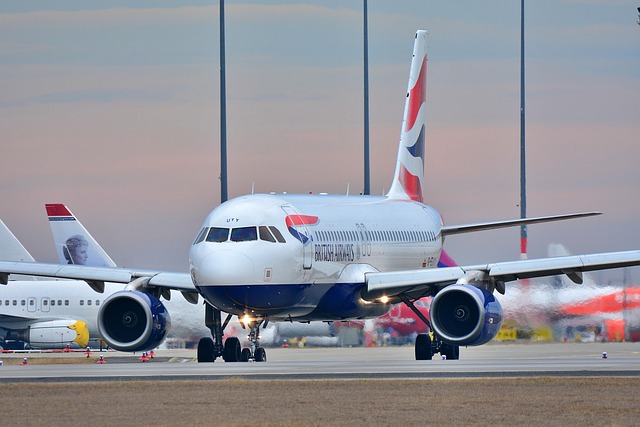

Route Network Showdown Where Each Airline Actually Flies
Let's get specific about what each major carrier offers a West Coast traveler. The table below compares key route categories based on the available data and industry norms.
| Route Category | Alaska Airlines (incl. Hawaiian) | Southwest | Delta | United |
|---|---|---|---|---|
| West Coast intra-regional (e.g., SEA-PDX) | Extensive, frequent | Moderate, limited frequencies | Good, but fewer direct | Good, but hub-focused |
| Hawaii from West Coast | Excellent (via Hawaiian) | Good (some routes) | Excellent (hub in SEA) | Excellent (hub in SFO) |
| Asia (Tokyo, Seoul) | Launched 2025 | None | Yes (via SEA) | Yes (via SFO) |
| Europe | Planned for 2026 | None | Yes (via SEA/LAX) | Yes (via SFO) |
| Mexico/Central America | Good | Excellent (many leisure routes) | Moderate | Moderate |
Alaska's advantage is clear: it now covers every major West Coast travel need. Southwest is strong for cheap domestic hops but offers zero long-haul international.
Delta and United have the global networks, but they don't have the same density on the West Coast as Alaska, and their loyalty programs are less rewarding for the average flyer. The gap widens when you consider Alaska's specific plans.The airline has already launched flights to Tokyo and Seoul. The available web content confirms it is also planning to launch flights to Europe in 2026.That means within 12 months, Alaska will offer direct service to three continents from the West Coast—something no other US carrier can claim from a single hub. For the West Coast traveler, this means fewer connections, less time in airports, and more direct flights to where you actually want to go.That's the definition of winning.Financial Health and Reliability The Numbers Behind the Choice
Airlines are businesses, and their financial health directly affects your travel experience. A carrier losing money cuts routes, reduces service, and may change fees or policies frequently.
Alaska Air Group's 2025 financial results tell a story of stability and growth.| Metric | Q4 2025 | Full Year 2025 |
|---|---|---|
| GAAP Net Income | $21 million | $100 million |
| Adjusted Net Income | $50 million | $293 million |
| Adjusted EPS | $0.43 | $2.44 |
| Total Revenue | $3.6 billion | $14.2 billion |
| Operating Cash Flow | N/A | $1.2 billion |
The airline posted a GAAP net income of $100 million for the full year, with adjusted net income of $293 million. Adjusted EPS came in at $2.44, beating expectations.
Premium cabin revenue grew 7.1% year-over-year in Q4, showing that travelers are willing to pay more for a better seat. However, no airline is perfect.Alaska experienced a tech issue in 2025 that grounded flights nationwide. The available content confirms an IT outage caused a ground stop for flights on October 23, 2025.This is a real operational risk. The question is whether the reliability gains from the merger outweigh the occasional tech failure.Also note the 2026 guidance: the airline expects a first-quarter loss of $1.50 to $0.50 per share, with full-year EPS of $3.50 to $6.50. That first-quarter loss suggests some integration costs or seasonal weakness, but the full-year range is solid.For the traveler, the bottom line is simple: Alaska has the financial strength to invest in aircraft, routes, and customer experience. Southwest, while profitable historically, faces margin pressure.Delta and United are strong but don't focus exclusively on the West Coast. Alaska's financial stability gives it the freedom to compete aggressively.Loyalty Program and Premium Experience Where Alaska Pulls Ahead
The loyalty program is the single most important factor for frequent flyers, and here Alaska has a distinct advantage. The merger with Hawaiian created a unified loyalty platform called ATMOS Rewards, as seen on the investor hub.
This combines Alaska's Mileage Plan—widely considered one of the most valuable programs—with Hawaiian's HawaiianMiles. For the West Coast traveler, this means you can earn and burn miles across a network that now includes Alaska, Hawaiian, and their respective partners (including American Airlines, Japan Airlines, and Korean Air).No other West Coast carrier offers this breadth of redemption options from a single program. The premium cabin experience also improved.Alaska reported premium cabin revenue growth of 7.1% in Q4 2025, indicating that passengers are upgrading. The airline has been investing in seat quality, lounge access, and onboard service.Practical advice: if you fly West Coast routes regularly, consider investing in a Travel Pillow for Airplane and a pair of Noise Cancelling Headphones for Flying—the premium cabin on Alaska's longer flights to Hawaii or Asia makes these upgrades worth it. You'll also want a TSA Approved Toiletry Bag to breeze through security at busy West Coast airports like Seattle or Los Angeles.The key point is that Alaska's loyalty program is not just a points game—it's a way to unlock meaningful travel benefits. If you fly even once per quarter, the program's value exceeds what you'd get from Southwest's Rapid Rewards (which devalues points frequently) or Delta's SkyMiles (which is notoriously difficult to use for premium redemptions).The Global Expansion Asia and Europe from Your West Coast Hub
This is where Alaska's story gets genuinely exciting. The airline has already launched flights to Tokyo and Seoul, with additional routes planned to Rome.
Combined with Hawaiian's existing network to Japan, South Korea, Australia, New Zealand, and Tahiti, the Alaska Air Group now offers the most comprehensive Pacific network of any US carrier headquartered on the West Coast. Consider what this means for your travel plans in 2026 and beyond.You can fly from Seattle or Portland to Tokyo direct, continue to Seoul, and soon connect to Rome—all on one airline, with one loyalty account. This is a level of global reach that Alaska simply did not have before the merger.The competition is weak here. Southwest has zero international long-haul capability.Delta and United have the routes, but they don't have the same density of West Coast hubs. Delta's main West Coast hub is Seattle, which it shares with Alaska.United's is San Francisco. Alaska now covers Seattle, Portland, Los Angeles, San Diego, San Francisco, and Honolulu as major hubs or focus cities.For the West Coast traveler, the decision is straightforward: if you ever plan to leave the continent, Alaska's expanding global network gives you more options than any competitor based in the region. And with the 2026 European launch, that advantage only grows.Frequently Asked Questions
Is Alaska Airlines more reliable than Southwest for West Coast travel?
Based on available data, Alaska Air Group reported $1.2 billion in operating cash flow for 2025 and a unified operating certificate with Hawaiian, suggesting a well-managed operation. However, Alaska experienced a nationwide IT outage that grounded flights on October 23, 2025.
Southwest has its own operational challenges, including a major meltdown in 2022. For routine travel, Alaska's financial health and route density give it an edge, but no airline is immune to tech failures.What is ATMOS Rewards and how does it work?
ATMOS Rewards is the unified loyalty program for Alaska Airlines and Hawaiian Airlines, as shown on the Alaska Air Group investor hub. It combines Mileage Plan and HawaiianMiles into a single platform, allowing members to earn and redeem miles across both airlines and their partners.
For West Coast travelers, this means more award availability and better redemption rates than most competing programs.Can I use a TSA Approved Toiletry Bag on Alaska Airlines?
Yes. Alaska Airlines follows standard TSA guidelines, so a TSA Approved Toiletry Bag is recommended for carrying liquids in your carry-on.
The airline does not have its own specific bag requirements beyond federal regulations.Does Alaska Airlines offer flights to Europe in 2025?
No, but the airline plans to launch flights to Europe in 2026, according to available information. Routes to Rome have been announced.
For 2025 travel, the best options for Europe from the West Coast remain Delta (via Seattle) or United (via San Francisco).What is the best way to fly to Hawaii from the West Coast in 2025?
Alaska Airlines, through its merger with Hawaiian Airlines, offers an excellent network to Hawaii from multiple West Coast cities. The unified operating certificate means you can book a single itinerary with seamless connections.
Hawaiian Airlines and Alaska Airlines were recognized as 2025 Outstanding Businesses by local nonprofit ClimbHI for the third consecutive year, reflecting strong community and operational performance in Hawaii.Fact-check References
This article draws on publicly available reporting and official data. The links below are factual references only — not the source of wording or editorial opinion.
- https://www.cbsnews.com/tag/alaska-airlines — checked 2026-06-10
- https://www.prnewswire.com/news-releases/alaska-air-group-reports-fourth-quarter... — checked 2026-06-10
- https://skift.com/2025/12/03/alaska-airlines-leans-on-hawaiian-for-global-expans... — checked 2026-06-10
- https://news.alaskaair.com/releases/alaska-air-group-reports-fourth-quarter-and-... — checked 2026-06-10
- https://news.alaskaair.com/company/2025-wrapped-a-look-back-on-alaska-airlines-a... — checked 2026-06-10
Affiliate Disclosure: This article contains affiliate links. If you purchase through these links, we may earn a small commission at no extra cost to you. We only recommend products we believe in.